 Episode 17
· 36:18
I think my my parents was very strict to Yosi. However, they didn't limit me from choosing my profession. The only one message I get from my dad is that no matter what you do, even if you become cleaner, you will be the best. I think that mentality stayed with me for quite a lot, and that through the climbing ladder with the journey for either CMS, WSET, or NW, I want to perfect my craft to a certain level that I can be satisfied myself.
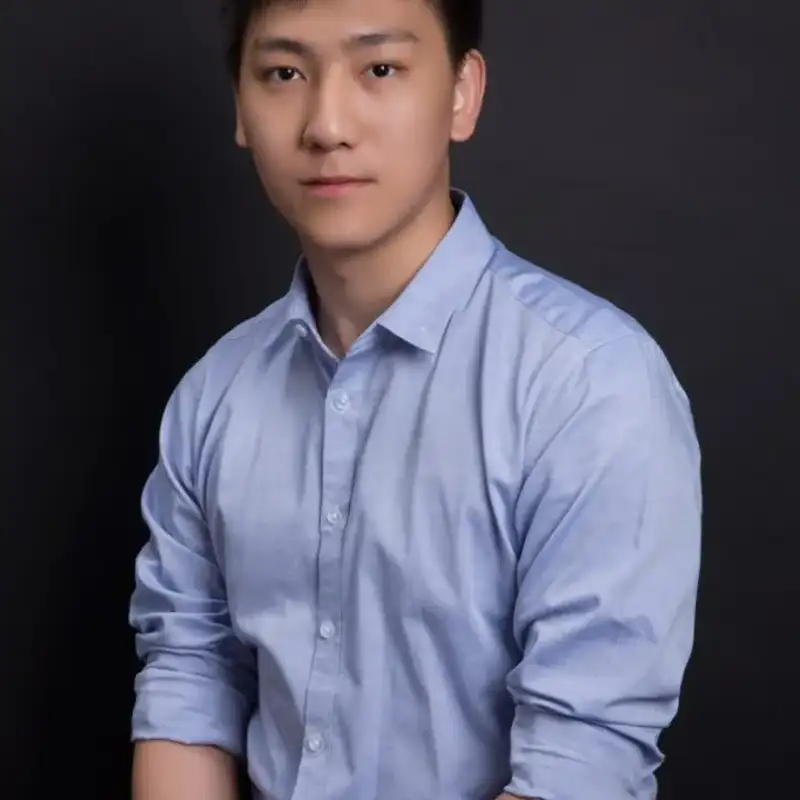
Alex Abbott Boyd:Hey, everyone. Welcome to Tasting Notes Toronto. I'm Alex Abbott Boyd. In this episode, I'm joined by James Lee, recent winner of the Best Young Sommelier of Canada competition and currently the assistant general manager at Diniko, a Michelin starred restaurant here in Toronto. James, thank you so much for being here.
James Li:Oh, it's my pleasure.
Alex Abbott Boyd:Congrats on the win of the best young Sommelier of Canada.
James Li:Oh, thank you.
Alex Abbott Boyd:That was super recent. Right?
James Li:Yes. It will be around two weeks ago.
Alex Abbott Boyd:Okay. And can you share just a little bit, like, what was that competition like? Was it the classic style where there was blind tasting theory as well as service?
James Li:The competition will be in two stages. First will be the regional theoretical levels. You have to write it in the top six in order to enter the final in Calgary. And the final, it will be the practical tasting, service, which including the decanting, sparkling wine, and also for the food and menu pairings. And who won the country final or the national final will go to the world final, and this year it will be in Sweden.
Alex Abbott Boyd:Congrats again. When will you be going to Sweden?
James Li:It will be October.
Alex Abbott Boyd:And if you win that, it will be best Young Salm of the world? Yes. No pressure.
James Li:There's definitely a lot of preparation that I need to do, a lot of theories, a lot of blind tasting, and I need to talk to the people who have actually been to this competition to get some of the insights help me better to prepare.
Alex Abbott Boyd:In terms of how much you need to know for, say, the theory portion, how does it compare to, say, the CMS grade? Is it advanced level? Are you using the prep you've been doing for Mastersom? How broad and deeper the question?
James Li:I think it will be overcertified, but not yet advanced level. However, it will cover broader broader information similar as the ASI format. Wanna throw in a lot of bureau questions, you wanna throw in a lot of the producer for the spirit, which sometimes can be a little bit more difficult than the advanced level for the scene.
Alex Abbott Boyd:Interesting.
James Li:Very different approach, a very different association, which is a very nice and a very fun learning experience.
Alex Abbott Boyd:K. And then in terms of the wines that you were having to blind taste, were they again, was it advanced level? Was it closer to certified?
James Li:I would say it's a kind of the combination between the WSET diploma and advanced. There's definitely a lot of wines that are not so classic in terms of the CMS route. I think for this year, we're tasting the South African Chenin Blanc, we tasted the Burgundy, I think that will be the Gili Chambarton. We have the Barossa Shiraz, we also have a nineteen ninety four Porte, which will be the combination between the both programs.
Alex Abbott Boyd:So did they tell you what the wines are afterward?
James Li:They will reveal at the end.
Alex Abbott Boyd:Would I be right in guessing Barossa Shiraz is like the nice, easy, like, you can knock that one out of the park?
James Li:I think that this time Barossa Shiraz actually is the one that none of us candidate who got the got the wine right. Oh, okay. It's it's one of the somewhat atypical definition for the Barossa Shiraz. Rather than the big, powerful, and concentrated, this one shows quite a lot of finesse in the middle, which has surprised a lot of people.
Alex Abbott Boyd:So last year in the best Ontario song contest, you were a finalist, but you didn't win. Were there certain areas that you really worked extra hard on between last year, the BOSC contest and then this best Young Sommelier of Canada?
James Li:I will say the mentality of performance, the performance under pressure. Because when you're reaching the final level of a certain competition, the theory knowledge for all the candidates will not have so much difference, also including the skill. It will really depend on how you can show your ability in the high stress level that will really distinguish the placement of the final result. This year I read a lot of different books. Recently I just finished Stephen Spurrier's The Life of Wine.
James Li:I think I finished some of the other books like Tasting Victory or Champions Think, how it will make the vote go faster. I think these books have really helped the mentality, the preparation for this kind of situations.
Alex Abbott Boyd:So could you give a specific example of something you learned in those books that helped you be more relaxed under pressure?
James Li:I would say the most important thing is that you have to strongly believe that you can win the competition before you can actually do it. But during the process, you cannot only focus on the final result. You need to focus on each individual test in front of you. As long as you perfect all those things, the result will show itself.
Alex Abbott Boyd:So was that was the main thing that you really worked on? Did you feel like you needed to step service or theory or tasting after that, after Best on Terrorism, or did you really felt it was like that that performance under pressure?
James Li:Well, the comment I got is that I sometimes speak too fast, which will be the normal reaction I have in the high stress situation. So I consult a lot of people, I also sit down with our chef Daniele to do a full manual pairings to some of the dishes. I think that kind of the knowledge behind me when I have the actual test in front of me, that really helps me to get much calmer in these situations.
Alex Abbott Boyd:I also saw that you had a very explicit goal of becoming the world's best Sommelier. Yes. When did that goal become real for you, and what's the motivation behind that?
James Li:I think when I first studied about wine, I don't know don't know there's a master wine, and maybe know there's a master's only that W said was the most common goal in front of me. And then after I start climbing up the ladder, I want to become the best, and I also want to learn from the best. So I started researching who is the person to get all the titles, and turns out to be my role model Mr. Jehab Basset, who got the world's best sommelier, master sommelier, master wine. I read his book Teaching Victory, and his life story really inspires me quite a lot.
James Li:I want to become a person and become a professional as good as him.
Alex Abbott Boyd:What about his life story was so inspiring?
James Li:I think it will be the simple reason that Wang become a very important, very essential aspect for every piece of the life. Through the lens of wine, you can meet a lot of great people. They also help you to build a career, build friendship, build some of the inspiration, and build the drives to the end.
Alex Abbott Boyd:Sure. But you don't have to be the world's best sommelier for that to be true. What was it that really lit the fire onto you as that being the goal?
James Li:I think my my parents were very strict to me, well, see. However, they didn't really or they didn't limit me from choosing my profession. The only one message I get from my dad is that no matter what you do, even if you become cleaner, you will be the best. I think that mentality stayed with me for quite a lot. And I, through the climbing ladder with the journey for either CMS or WSET or MW, I want to perfect my craft to a certain level that I can be satisfied myself.
James Li:Right now I feel like I have so many things I don't know than the things I do know. I really want to get better each single day. And hopefully reaching those goals can help me to answer my question, help me to find peace in myself.
Alex Abbott Boyd:Yeah. Are you enjoying the journey?
James Li:I would say right now I'm still deciding am I really enjoying it or not. When I first started, I had great fun. I was drinking every day, had the rapid development. I have a very rapid return in all my effort and all my reward. But right now I feel like it still accumulates, but it still accumulates in the much less noticeable levels.
James Li:It will need to count it by years or over a couple of years in order to see the result.
Alex Abbott Boyd:Would you be disappointed if, say, you became the world's best sommelier, a master of wine, but not a master sommelier? Is is achieving all three very important?
James Li:I never thought about questions, because right now my life is built on the these three goals that can keep me improving. But I don't know if my determination or my drive will shift after I achieve one or multiple of those. I hope it will continue to stay the same that enables me to push even further. However, I think the main question to ask myself is that if I one day achieve all those goals, what will be the continued drive for me to
Alex Abbott Boyd:push forward? And what do think it would be?
James Li:It would be a more deeper philosophical question. It's that you don't have a higher entity to please. Right now it's the examiner for both institutions. I think I need to deal with myself and my inner peace even greater when I achieve those goals.
Alex Abbott Boyd:So how do you approach studying? To bring it back from the philosophical to the practical, what does a typical day between your work at Danico and studying look like, and how does a month look like? How do you think about it?
James Li:I think if we talk about day to day, I will wake up around nine to ten in the morning, I will use around ten to one to all the theoretical studies. That way it will be the best way to help my brain to receive the information. Starting from two and until around ten or eleven in the evening, it will be the work time, which will shift my mindset away from the study. When I go home, I usually sleep around two to three in the morning. That way I will use the time to write essays, that will time to generate all my thoughts.
James Li:I normally blind tasting during the weekend. That would be a very nice escape from all the work schedules.
Alex Abbott Boyd:What's your favorite part of studying? Yeah. And I ask that because for so many people, it could very easily just totally ruin their enjoyment and love of something like wine. Has it done that for you? Or are you finding a lot of meaning and happiness in this person?
James Li:I would say the happiness from when it comes, sometimes it shows up, but the majority of time is hidden very underneath. You have a lot of struggles, a lot of challenges every single day, because getting up very early in the morning just to sit through twelve night tasting is not easy, and it's not enjoyable. However, all the lessons you learn after each exercise will make me very happy because I learned something. The most enjoyable part, will say, is the theory. Cause think about it, blind tasting, you cannot really predict what the wine will be.
James Li:For the practical, you can never know what the examiner will throw you in a certain situation. But for the theory knowledge, it will just stay there, although it will keep updating, but it will not run away. The success for theory portion is just depends on how much time you put into the study. And every single time I read new things, it makes me happy because it contributes to my complete knowledge set. However, I also traded my social life to the majority of reading I do.
Alex Abbott Boyd:You said something interesting, which was that for the blind tasting, you can never know what the wine will be. But isn't that the whole point of blind tasting? To be able to know what that wine is going to be?
James Li:I think if I'm only preparing for the CMS, I would really focus on getting the graveyardities, getting the region, what you meant the producer right. But after engaging in the MW, I will say it will be a little bit more important to see how the region, how the country defines a certain style of wine. CMS never really focuses about the country profile: how does wine from France taste like, how does wine from Australia taste like, or from Italy taste like. But for the MW, they want to know the country profile or the regional profile, and the blind tasting help you to identify how the producer is being placed in terms of the regional quality, which will be a very nice or different approach that I also learned a lot from.
Alex Abbott Boyd:But do you think that countries do have a certain taste? Think about Australia and the range from what we were talking about before with the typical Barossa Shiraz to a more restrained and elegant one, to something from Tasmania or a Pinot Noir or a Chardonnay like we're drinking from Bindi in the Macedon Hills is going be so different.
James Li:I also thought the same, but after I engaged in the program, I find that Australian wine has a very distinct character which will be the pristine for the fruit. Normally we think about the warmer region or even the colder region. The definition of fruit is so clear and so precise that will normally lead me to Australia.
Alex Abbott Boyd:What does a French wine taste like?
James Li:I would say French wine tastes in the balance between the fruit expression and the mineral driven characters. Although sometimes there will be a French ochre popping up at once or not, you can find a little bit more elegance and more finesse in this wine than the more expressive characters.
Alex Abbott Boyd:And you think that holds from Bordeaux to Beaujolais to Champagne to the Southern Rhone? I think you can see that characteristic right across the board.
James Li:It would be very restrained, like, fruit character. It's like you want to tell a story, but you don't want to show a story directly in front of the wine drinkers. That would be my interpretation. Interesting. However, I might be wrong.
Alex Abbott Boyd:So you mentioned that you're very focused on the goals now. Have you thought about career wise, when you achieve your three goals, what will you be doing?
James Li:I will still be engaging in the wine industry. However, I won't focus 100% of my energy to only to the hospitality. I also want to engage in the teaching, lecturing, masterclass, and helping all my colleagues and all my next generation for Sommelier to become even better. I think that holds a larger responsibility in terms of the industry, rather than limited myself only to hospitality.
Alex Abbott Boyd:Oh, you don't want to be immediately become like the brand ambassador for a major champagne house or something like that?
James Li:If you asked me the question around three years ago, I would say I definitely want to do that. I think for the Ian Kobel, who after becoming the masters only, who suddenly become the brand ambassador for the crook, that would be very good things and a very procedure thing to do.
Alex Abbott Boyd:Flying around the world drinking crook sounds pretty nice.
James Li:Yes, it is. However, I think right now, I don't really want to be so much forward about my characteristic compared to myself a couple years ago. I want to be quite stable and find peace and gradually improving, rather than demonstrating everything that I have. Maybe that will be a shift of mentality.
Alex Abbott Boyd:Ian also started a business. He started a business called Sommelier Select that was That selling wine was one of the main places I bought wine when I was not in the industry, but I just loved wine and I was living in The US. Okay. So shifting gears. Yes.
Alex Abbott Boyd:So you're now the assistant general manager at Danico Yes. Michelin starred Italian restaurant here in Toronto. Could you share just a little bit about what Danico is all about? So tell me about the chef, tell me about the cuisine, tell me about the beverage program.
James Li:I think Nico will be placed as the Italian contemporary cuisines. Our chef is from the Annapolis in the in Italy who is bringing all the authentic Italian culinary experience, however, with international influence. Sometimes we also have the inclusion of techniques in Japan, in China, in Brazil, or in Chile that will be a very nice inclusion for how Italian cuisine approach for the multiple culinary techniques around the world.
Alex Abbott Boyd:Is there any dishes that are, like, must try, been on the menu since the restaurant opened?
James Li:I think it will be one of the pasta dish called the spaghettongni, which will be one of the chef's signature dish when I first attended Danico around the January 2025. I'm also very surprised by the quality of the pasta. It is being infused with a lot of the essence from the organic mushroom, Parmigiano de Janofong, and the very beautiful shaped Italian black truffles. It's a combination between the savouriness, creaminess, and a lot of the umami characters, which has surprised me really.
Alex Abbott Boyd:And then the beverage program, how many wines are on the list?
James Li:I think that for now, we're currently around less than a thousand SKU. There will be quite a lot of the selections. Since Danico also have a lot of the very professional summaries being over with the journey, every summary also brings their own definition for the wine into the program. That's why when I look at the beverage program now, you can see the traces from each summary and how they're interesting for their for their areas, which surprised me quite a lot.
Alex Abbott Boyd:Okay. And is it I would guess it's primarily Italian wine, or is it a good mix from all over the world?
James Li:Primarily, we have a lot of collection for the top notch Italy, but we're also focused on France, Old World, and some are very nice collection for Canada.
Alex Abbott Boyd:And what kind of beverage pairings do you do? Is there this is one wine pairing? Is there a couple wine pairing options? How does that
James Li:I think we currently have two tiers of wine pairing. One will be the Sommelier lead wine pairing focused on the young vintage of the Italian wine. The second will be the premium pairing, which will be little bit older vintage, travel around the world in the famous region, and explore some of the famous producers. However, the restaurant is also working on the even higher tier pairings. It will be the legendary, which will be the unicorn lineup for each single one of them.
Alex Abbott Boyd:And so now at Danico, you are the assistant general manager? Whereas before your last role at Edinburgh, you were the head sommelier. So how have you found it stepping into an AGM role versus being purely focused on the wine list?
James Li:I think that gives me a more holistic view about the how restaurant or how the industry operates. Because for the AGM, you don't only think about the whole beverage program will contribute to the entire restaurant sales. You also need to think about when the first guest worked in or during their reservation level to when the guest left, the entire experience. And it makes me realize that beverage is not the main focus. Culinary is not the main focus, but the entire experience, probably the things that invite the guest to be back for the next time.
Alex Abbott Boyd:Is that a little humbling to realize that while we love wine so much, that it's just a smaller part of the experience?
James Li:I will say unfortunately it is. Although it can be a very major experience for some of the very nice and very enthused wine connoisseurs, But for majority of the mainstream consumers, it will be a cherry on top rather than the main dish of the evening.
Alex Abbott Boyd:As AGM, you're now working with the head sommelier, Allison. Yes. I know you've only been there a relatively short time, but what are some of the favorite pairings that you've done with her?
James Li:I think Allison is a very great person. I really enjoy that every single day I work with her. I really hope that we can continue to develop this positive collaboration in the work culture. It's really fascinating for me to see somehow all my colleagues have a different approach of wines that can exceed in terms of the building connection with the consumers, with a guest immediately, that fascinates quite a lot. Currently for the premium pairing, we have a very nice sparkling sake from the add on to cast.
James Li:It will be one of the very nice starting point of the premium wine pairing experience. Since sake is very trendy at this moment, sparkling sake will be an even more niche category for the consumers. For some of the serious wine collectors, it will be a very nice alternative option compared to some of the traditional method sparkling lines like champagne, like French Air Corta, or like UK alternative.
Alex Abbott Boyd:And what is the flavor profile?
James Li:I would say a combination between the savviness and the creaminess and the semi aromatic. It will be a completely different profile than the champagne word than the majority of the sparkling wine.
Alex Abbott Boyd:How does it get the bubbles? Is it traditional method, like fermentation in a bottle? Is it injected with CO2?
James Li:Does it It will be the secondary fermentations. Since sake also have the different classification the introducing for the sparkling wine. Traditional method, which they have a little association, called the Awasaki, will be the most prestige one. They also can inject CO2, however it will not be as smooth or as delightful as the traditional.
Alex Abbott Boyd:Is there an equivalent to time on the leaves when it's sake?
James Li:I will say it will operate a little bit different than the wines. For the sake, sometimes you can also include the leaves in the bottle. I think there will be a bottle I used to service called the Masumi Origarami, which at the bottom it will be quite one centimeter for the thick lees and the rice sediment. Before you're serving that, you have to turn the bottle upside down, shake it quite a bit to mix everything together, and have a different opaque level for each single glass. Think I that operates a little bit differently than the clean and the clear crisp representation from champagne.
Alex Abbott Boyd:And so what are you pairing this with on the menu?
James Li:This will be the first appetivo, which will be the mousse bush or canapes to start the experience. There's a lot of element, savory, crispness, and some of the gentle heat will be very nice pairing with the sake.
Alex Abbott Boyd:Do you think that more wine professionals should really work on building kind of those AGM and GM skills.
James Li:I will say the wine industry is consolidating at this moment. There's a fewer Sommelier or pure Sommelier designated positions, and I suspect it will be even more niche in the futures. Since everything is getting more expensive, the possible employer probably wants one person to have multiple hats, and having the management responsibility will be a very nice alternative advancement for the Sommelier.
Alex Abbott Boyd:There are multiple Michelin starred restaurants here in Toronto that I work with where the people building the wine list are the GM. Yes. It feels like if you are a GM who has your level of wine knowledge, you're like you're a weapon. But if you're only gonna wanna be a sommelier at that level, yeah, your options are just way more limited.
James Li:Yes. Because sommelier also have a very clear seating. It will be wine directors. It's really hard for the sommelier to keep advancing when they only focus on wine, Since they are also part of the front of the house, it will be a kind of different route to take from the Sommelier. However, I think that it will become more apparent route Sommelier with management responsibility in the near future.
Alex Abbott Boyd:So tell me about how you first got into wine.
James Li:There's two stories, each of them have a certain kind of authenticity. The first story is that I participated in one of the top elite wine law firm program in China. It's called the Qianwu Madison Legal Elite. And during the courses, have multiple professional partners and lawyers give us electors. We also have the group project that we need to perform in certain levels.
James Li:In one of the group projects, we want the second place. We can pick a bottle, it will be around 10,000 RMB or Chinese money. I think that will be the first bottle I I formally drink. I had no idea what that is.
Alex Abbott Boyd:So that was purely a law contest?
James Li:Would be a law program.
Alex Abbott Boyd:Law program contest, but there was a bottle of wine then.
James Li:Yes. I think we decanted it in a warm decanter during lunch. We have not a single idea of it, but it tastes quite nice.
Alex Abbott Boyd:Do you remember the model?
James Li:I think that's the Vega Sicidia Unicorn.
Alex Abbott Boyd:Hope you gave that a nice long decant. I think we we finished the bottle pretty quick, but it would be
James Li:a very nice experience to start a to start The a second story also comes that there will be a lady I really want to pursue. We signed up for the same WSAT course together. However, she decided to drop in the midway, although I already spent a lot of money. I said, why don't I just finish it and see how it goes? After I finished the first WSET course, I realized my parents hold the same certification as me.
James Li:I'm like, I also want to be a little bit better, so I signed up for the next one. I think that will be the initial momentum, or both stories will be my initial momentum to start a wine experience.
Alex Abbott Boyd:Interesting. And so your parents are into wine too?
James Li:When they are in the business, they're also interested in learning a little bit more about wine. Mhmm. They want to enjoy a little bit more, So they also started learning that. However, they are now in the wine wine industry, my dad focused on the economy, my mom focused on finance.
Alex Abbott Boyd:What happens during that class that makes you think, oh, I love this. I wanna stop pursuing the law and look into wine.
James Li:I think during the class, I realized that I may have a better alternative than sitting in the office all the day. Because during that time, I'm although my life is a little bit more abundant, my linear expression right now, I didn't really enjoy it that much. There's a lot of bureaucracy, there's a lot of people I need to please in order to maintain a positive relationship in the workplace. I don't quite enjoy that. However, sign up for the WSED course invites me to another industry which is completely different.
James Li:I said, I'm still young, I still have some time, why don't I give it a try?
Alex Abbott Boyd:How did your parents feel about you making that switch?
James Li:They were really suspicious, say, in the beginning, because I understand their point of view. They spent a lot of money to send me to study in Canada, spent a lot of time, energy, and all the investments. They are not really happy for me to work in a restaurant. In the beginning, they said why did I spend lots of money in the first place. However, in order to make them happy and to make them feel proud, I need to work even harder to prove to them that this is something I really like, something I really enjoyed.
James Li:I hope they are proud of me at this point. However, I want to make them even more happy.
Alex Abbott Boyd:Shifting gears again, just to get your opinion on different topics within the world of wine. You mentioned that you've spent a lot of your time and your life in Beijing. What do you think
James Li:of Chinese wine? They hold great potentials. I think right now there's a lot of investment going to China, and some of the region already shows they are capable to produce great wines, with multiple expressions from China. Although China right now is quite famous for their international Ying Wu Bordeaux blend, some of these also start to emerge to become the identity of China. We picked macelan as a red wine, I think it's a cross of the Cabernet Sauvignon and the ganache.
James Li:We also picked the Petit Mansing as a white grapes. Although these two grapes are the secondary choices from the French winemakers, They show great potential and a great identity in China, which surprised me quite a lot.
Alex Abbott Boyd:Do you have any favorite regions or producers? When I went to Australia last year, I flew Cathay. And just because it had such a good selection of Chinese wines, I drank Chinese wines the entire flight, and I quite enjoyed it. But I was drinking Syrah and the Cabernet, like bigger reds. I'd love to know any favorite producers, styles.
James Li:I think right now, although China was really focused on the big Bordeaux or powerful expressions around twenty years ago, right now, consumers start to realize they want to have a more leaner and a more famous profile. I really like the Silver Heights, which is one of the cold wine producers in China, really famous, they also hold the couple of masterclass in Toronto. They are the really nice balance between the fruit forward expression, restraint, mineral driven, as well as the floral notes, which surprised me quite a lot. The second is the Hai Feng Cai. I think when I was enjoying one of the Mission Dining restaurants in China, I ordered a bottle of the Hai Feng Cai's Beitie Mansing, and I finished the bottle by myself.
James Li:That's how much I really enjoyed it.
Alex Abbott Boyd:What was the flavor profile like? I drink very little petit mansing. It's hard grape to find.
James Li:I would say it's a very mineral driven, crisp acidity combination between the tart orchard and light citrus characters will be with a very minimal oak influence. It will be a very linear and very crisper expression.
Alex Abbott Boyd:What was your favorite wine pairing? First, that you've had an experience at a restaurant, and then second, that you've been able to offer a guest.
James Li:The one I can offer to a guest is the pairing with caviar and scallop. You will normally will pair with this with a very nice chablis or very nice champagne. However, I chose the Estee de Aglio from the Santolini for the acidic oil. The very beautiful mineral driven characters, crisp acidity, and touch of the smoky notes will really surprise a lot of guests for the pairing with the or untraditional pairing for the caviar and the scallop.
Alex Abbott Boyd:Which was this at Enigma or the Nico?
James Li:It was at Enigma. I really had the great fun thing about the pairing.
Alex Abbott Boyd:And favorite wine pairing that you've experienced? Oh,
James Li:I think it will be one of the pairing we'll have with the Pant au Chocolat in the Le Genie. I think we paired with a very nice Jackson seven forty two DT with the Pant au Chocolat. I never thought the pairing would work, however the Panto chocolate don't have a lot of sweetness, it's more concentrated for the savouriness and touch of the bitterness in the end. The very beautiful umami from the Jackson DT seven forty two really surprised me quite a lot, I never thought these two combinations would work, champagne and the semi sweeter pastries. However, some somehow it works together.
Alex Abbott Boyd:There's a lot of talk from people in their thirties, forties, and fifties about the drinking habits of people in their twenties. As someone who is in their twenties and is very passionate about wine, obviously, you're not avoiding wine. So my question is, like, what do older generations not understand about people in their twenties and how they want to drink?
James Li:I think the younger generation with the similar age, one of my friends around me, they have a different approach to drinking. Why in Houza are the entry barriers to enter? Because there's a lot of grape varieties, a lot of countries, lots of appellation you have to follow. And so really connecting to what shows on the label to the style you really have, and together with the increasing price point for lots of the classic region, that will be a very of the scaring away for lots of people, that's why they tend to choose a more easier understanding categories, like tequila, or like whiskey, like vodka, or like beers. However, the idea of the drinking is also changing.
James Li:People try to spend less money on the beverage or alcohol beverage, but they tend to focus more attention on getting the quality beverage with a very reasonable price point. Rather than chasing the big names compared to the couple since twenty years before, they are chasing the quality and they're chasing the story behind each bottle. I think that will really define the modern generation.
Alex Abbott Boyd:How have you gotten your friends into wine? Have you succeeded in converting a few people?
James Li:A few of them. I normally let them into the very not fine dining, but a very nice good environment restaurant. I will order some of the classic expressions like chablis, like sanshe, like champagne, any of the very special wine that I really enjoyed. I think I would let them first taste about some of the pairings and then taste the wine by itself. It would be a good way to see how the wine will interact with the food and then lead to the enjoyed wine alone.
Alex Abbott Boyd:And that's worked? Converted a few? Two.
James Li:Right now.
Alex Abbott Boyd:Okay. Awesome. What do you think are some of the most exciting wine regions right now and wine styles?
James Li:I think currently, I will say two regions that surprised me the most. First, it will be the Tasmania. I tasted some of the very nice cooler expression examples and also from your introduction, which has surprised me quite a lot. Their linear expression from the marginal cool climate can result in the very refreshed and crisp acidity, which will be something that a lot of the classic regions are gradually lacks of due to the influence of climate change. Either their Pinot, either their sparkling wines from the Tastemite will be a very nice expression that I really can find.
James Li:Want to enjoy something that's linear, crisp, and elegant. Second, it will be the Southern part of The UK for the champagne or the traditional method of sparkling wines. Although we normally think about The UK compared to champagne as a more greener expression due the Northern Latitude and have a more fresher aspect due to the less reserve wine that they use, however, the accumulation for the last couple vintages as well as the increasing quality and increasing global attention for the small niche regions really surprised me quite a lot. In a lot of blind tasting, I really cannot distinguish the the very high quality UK sparkling wine from the top champagnes.
Alex Abbott Boyd:Interesting. What are some of your favorite producers?
James Li:I think the one that surprised me the most is the Domei Evermont. It will be the one of the estates from the Tatungje established in the Southern part of The UK. They use a lot of reserve wine in their first ever vintage release, which the producer has been building in the quite a lot of years before they even released the first QV. I think that's what shows up in my MW mock exam yesterdays. I called it a very nice quality champagne and turns out to be the the sparkling wine from UK.
James Li:That surprised really a lot of people in the room who are doing the blind tasting.
Alex Abbott Boyd:Besides The UK and Tasmania, are there any regions you think that North American shawl sommes should have on their radar but don't know?
James Li:I think I would say although trade wars are fortunate and able really hard to replace the importance of US, the classic region, in the wine history, it does give an opportunity for at least the local Ontario consumers to enjoy more Ontario wines. While I was working at Enigma, there's a lot of perceptions that guests will lead away from Ontario because they have the perception of inferior quality compared to the classic regions. But I try to give them at least an opportunity to explore some of the best examples for the Ontario wines. I think it will definitely increase in terms of the quality, the production level, as well as the global attention for these regions. We have a lot of the great people working in this industry, which I also really admire and really looking forward to learn from, which should even make Ontario interesting.
Alex Abbott Boyd:Are there any favourite Ontario producers you want to give a shout out to?
James Li:I think first there will be the Ang7 from Vitoria, who is having a very small acres of vineyard devoted just for pinot na and for chardonnay. I used to carry the Ang7 the devotion Chardonnay all the time. The most surprising thing is that one of my colleagues to brought the Ang7 Chardonnay 2021 vintage in the little ceremony at the end of the MW bootcamp. I'm like, oh, I know this bottle. I know that producer is a great person.
Alex Abbott Boyd:Favorite bottle of wine you've ever had? And it doesn't have to be the most famous or the most important, but the one that when you were drinking it was the most delicious wine in the world.
James Li:I think that will be for twenty fifteen vintage of the Beviche Grand Cru Ai. I think that is the first bottle I purchased after I passed my advanced exam. I wouldn't say passing my advanced exam is fun. I got the placement in less than seven weeks to tell me that I can have opportunity to attend the exam. I quit my position immediately, threw out every single thing out of my life.
James Li:I was studying maximum to sixteen hours a day just to pursue the certifications. Somehow, by the miracle, I did receive the final result for the exam. I'm really happy, and I really want to buy a champagne to celebrate, I think that is the bottle I popped.
Alex Abbott Boyd:Why did you pick that bottle?
James Li:I think if you're looking for some of the expressions compared to the more linear ones, Rob Behej is more complex, more savory, and more concentrated. I want to find something that matches the weight that I put all my effort in for the last, I would say, seven weeks. I'm really happy.
Alex Abbott Boyd:To wrap things up, what do you love most about wine and hospitality?
James Li:I think the wine gave me a scope to explore other important regions or other important topics around the world. I learned a lot about the history, a lot about geography, the culture, the art, and although the story of people behind it, It's like the connecting with the intersection for bringing all these different aspects of life together. That fascinates quite a lot, because without one you can never have a very unique career, very different lifestyle, and all the great people, including you, that I admit.
Alex Abbott Boyd:I totally agree. That's why I love it too. Thank you so much for your time.
James Li:It's my pleasure.

Listen to Tasting Notes Toronto by Insider Wine using one of many popular podcasting apps or directories.