 Episode 14
· 01:17:57
I think hospitality, it's not easy, but it's simple. It's a couple key things. Beyond clean tables and good sequencing service, Make a table feel like they're not table fired. Have an interaction with them. Understand why they're here.
Christian Perreault-Hamel:Unprompted actions and anticipation, I think, makes such an experience. Because then, as a guest, you feel seen. And that's why you want a restaurant, especially a restaurant that I think that's full. If your server or your sum comes and make a move before you even prompt it, oh my god. They're actually paying attention.
Christian Perreault-Hamel:It's amazing. And that's what you're paying for, especially if you're paying we're a destination restaurant. We're not cheap. So you expect to feel a little something more than just, I'm ordering food. I'm getting the food.
Christian Perreault-Hamel:I'm getting the check. That's not enough anymore.
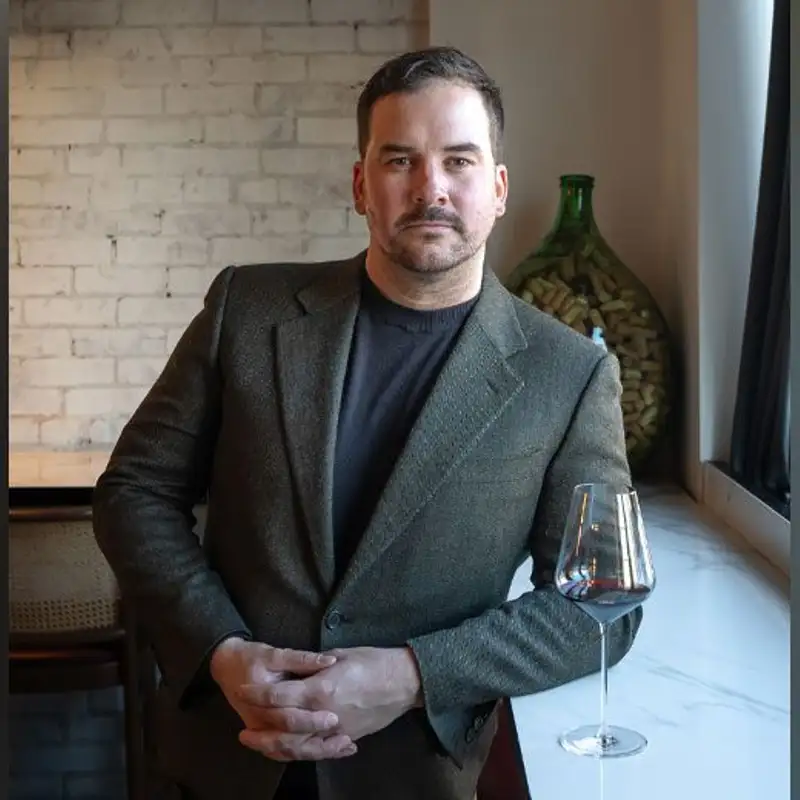
Alex Abbott Boyd:Hey, everyone. Welcome to Tasting Notes Toronto. I'm Alex Abbott Boyd. In this episode, I sit down with Christian Perreault-Hamel, wine director at Harbor sixty and winner of the twenty twenty four Best Ontario Sommelier competition. Christian shares his experience building Harbor sixty's 25,000 bottle wine program, his favorite ways to personalize wine service for guests, his experience prepping for the master somm exam and competitions, as well as his own journey from the arts into wine and hospitality.
Alex Abbott Boyd:If you're curious what it takes to run one of Canada's most ambitious wine programs and build a life in wine, you won't wanna miss this episode. Just a quick note that if you've been enjoying these episodes, a rating or review literally only takes five seconds and helps a lot more than you think. Here's my conversation with Christian Perreault- Amal. Christian, thank you so much for being here.
Christian Perreault-Hamel:Thank you so much for having me.
Alex Abbott Boyd:To kick things off, could you share just a little bit about who you are, what you do, and how you found your way into wine and hospitality?
Christian Perreault-Hamel:Sure thing. So my name is Christian Perreault- Amel. I am the wine director at Harbor sixty Steakhouse and Ariana Restaurant. I am also the owner of Pelican Wine Imports, and I do a bit consulting as well on the side. How do I get into wine?
Christian Perreault-Hamel:By it was a kind of a fallback situation. So, originally, I'm trans an artist. I went to fine art school. I was a painter. I tried to give it a shot for a hot minute.
Christian Perreault-Hamel:Turns out nobody tells you that art doesn't pay. I had to supplement my art with working at bars. My ex brother-in-law used to own a bunch of bars in Montreal. My sister got me a job through there. I was started as a barback, built my way to a bartender at a beer bar.
Christian Perreault-Hamel:Ended up working at an Irish pub where for the first time I was working with seasoned hospitality professionals. And these guys were geeking out about scotch, about beer, provenance, flavors, and I never realized I could geek out about beverage for me. I was just drinking. I was 19, 20 at a time.
Alex Abbott Boyd:What was the name of that bar?
Christian Perreault-Hamel:The it was called the Maccarrels in Montreal in Cote D'Inege. For those who knows or anybody who've been to University of Montreal, they know that pub very well. If you go to Montreal, it's a little bit out of the way. It's not downtown, but definitely worth a visit. And the kitchen is phenomenal.
Christian Perreault-Hamel:I love pub food. So working with these guys kind of made me realize that, okay, you can be proficient at beverage. I'm like, okay, that's cool. So I was kind of at the crossroad. Was turning almost 22 at the time.
Christian Perreault-Hamel:And I figured like, yeah, gotta do something with my life. The culinary school in Montreal is a very, very good school at ETH too. So I went there to study management. Wine was not I wasn't drinking wine. Wine was not a thing at all.
Christian Perreault-Hamel:I go to study management. In management class, of course, you learn that beverage is how you make a living. Like, restaurants are good, but you gotta sell beverage. So I started diving a little bit. I do my intro in my certified sommelier.
Christian Perreault-Hamel:I dab a little bit into it, but wine is very intimidating. And at the time, still today, Quebec has such a strong sommelier scene that it was a bit intimidating.
Alex Abbott Boyd:So how did you go about learning when you were doing intro in Certified?
Christian Perreault-Hamel:Couple books. Like, there's one guy I used to work at this restaurant that was actually in the building of the culinary school called Ed Exchequerier. He was the sommelier over there, and he's the one who took a liking to me and decided that I'm gonna make you a wine guy. And he would pour me wines, tell me where it's from, what's the name of the grape, how did it make it. And at first, I was just like, it's a red wine.
Christian Perreault-Hamel:It's a white wine. I was like, that didn't make a difference. And he really got into my case, and eventually something clicked. And, yeah, it gave me a couple of resources, and the Internet was great. And I was really just wiggling my way.
Christian Perreault-Hamel:I was definitely I passed probably my certified with, like, barely with a passing grade. Like, I didn't do well. Then I get hired, and I moved to France as a cuss controller for a big hotel chain hotel over there in Poland. And that's where I start, first of all, wine in France. The good wines are actually affordable.
Christian Perreault-Hamel:So I could go grab just a head of lettuce at the grocery store and be like, oh, there's, like, more going for €5. I'm like, I could grab all of that as well and at home with their roommates, open bottles and drink. You can buy wine on eBay, which was phenomenal because I could buy I didn't know German wines at the time. I would be like, oh, an old reasoning from the eighties for $20. Right?
Christian Perreault-Hamel:Oh, we'll try that. And then you try a bunch of things, and you kinda slowly get into it. Start hanging out with French sommelier as well, and you listen to them talk, and you're like, that's cool. So I do my level three w set in France. And then when I leave France, when my contract expires, I moved to The US, and that's when I forgot about the MS Biden.
Christian Perreault-Hamel:Then moving back to The US, that's when some of my reps are advanced. You hear about masters. The son I was working with, Sam Fisher's from Montreal. Shout out to him.
Alex Abbott Boyd:Were you doing in The US?
Christian Perreault-Hamel:I was a food beverage director for a small high end restaurant in Massachusetts. Again, good wine, but not a 100%. Looking back, I remember some of the bottles we were moving and I didn't appreciate what they were. Looking back today, I'm like, yeah. We'd sold DRC sometimes, and then my SOM had to explain to me how much of a big deal DRC is.
Christian Perreault-Hamel:Yeah. I'm like, yeah. They're expensive. And they're like, oh, listen. Like, DRC is DRC.
Christian Perreault-Hamel:And I was like, okay. Cool. So you gotta get me excited.
Alex Abbott Boyd:Yeah. When I did the advanced class and I was getting to know the somms from all over The US, it was basically how they tried to establish their credibility was how many bottles of DRC they sell a year.
Christian Perreault-Hamel:Which we can talk about in a minute, but I see my mind a curve of excitement for labels goes up when you're agreeing some, and eventually, it just fades away a little. Because if you're a real car guy, you're excited about Ferrari and Lamborghinis. And then as you mature, you're like, no. I like a vintage Aston Martin. I like like those kind of more niche cars and Yeah.
Christian Perreault-Hamel:You get a little bit more toned down in your flavors, I feel. And I think that's how a lot of people progress as far as, oh, I'm selling Mouton. Like, great. Moutons are phenomenal. How's the wines are objectively phenomenal.
Christian Perreault-Hamel:But now I'm more excited about sending obscure grenache from the Sierra Great Hills in Spain or Yeah. Japanese wine or stuff like that. But yeah. So just to end so coming back from Massachusetts, I'm back from Montreal, do my events, move to Toronto, and meet all these phenomenal songs. Toronto has been such a great scene for me.
Christian Perreault-Hamel:From the start, people welcome me, open arms, tasting groups, study groups, masters actively involved. Like, it's been a phenomenal scene for me, and, yeah, just been growing since.
Alex Abbott Boyd:And so I know you worked in OPA to Couchon, Madras. So when when how does that fit into this timeline that you just laid out?
Christian Perreault-Hamel:2018, I leave my job in Massachusetts. This place is no longer it was quite chaotic. It was great for the food and the wine, but Time. I'm not gonna talk ill of the place, but every manager has walked out for stolen wages and stuff. So we all leave, move back to Montreal because that's my visa was associated with that place, I had to move back to Canada.
Christian Perreault-Hamel:And funny enough, I think the week I moved back, I actually reconnect with Eric Sherier, the gentleman who got me into wine, and we go to this place called Shilohik Montreal for those who remember. Great place. And we're just partying a couple days before New Year's, between Christmas and New Year's, and we meet with Florent, which is now the GM at Joe Beef. But he was a GM at Sebastian back then, and we just talk, and he's, what are doing in town? And I'm just coming back.
Christian Perreault-Hamel:I'm gonna look for some work. I'm like, fuck. Come next week. I need a server slash something. I'm like, cool.
Christian Perreault-Hamel:That's it. It was order drinks one night.
Alex Abbott Boyd:That's incredible because it's such an iconic institution. What was it like to be there? What was the energy like? What kind of wines were you serving?
Christian Perreault-Hamel:When I got started studying like, when I started restaurants and I started getting to the wine the restaurant scenes, even before the wine scenes. First of I was studying with Michele Picar, which is Martin's nephew who's now a coroner and runs the kitchen at Hopi Couche in Montreal. We were studying together, and I remember just thinking that restaurant was can I swear on this? Fuck. Yeah.
Christian Perreault-Hamel:The restaurant was a shit. And I always looked up to the craziness. You look at the dish you're making, and you're like, how are you selling this? And people get excited. To this day, don't see restaurant, at least in Canada, that does the audacity of the dishes that they're doing.
Alex Abbott Boyd:Can you give an example of one of those?
Christian Perreault-Hamel:My favorite special is always a pig's head, so it's gonna gross a lot of people. But it's a whole pig hip that they would cook in the wood oven, then deep fry in duck fat, and then they would serve it with a lobster coming out of its mouth on a bed of mashed potatoes with rapinis on, like, a silver or wood slab, and you just put it on the table, like and you just eat it from the head, cheeks, the snout. Everything is crispy. Sounds good. It is so good.
Alex Abbott Boyd:Oh my goodness.
Christian Perreault-Hamel:It's so good. And what I love working there is you'd walk to a table and chef goes, I got two pigs at tonight. We know we're gonna fight because we know everybody would want it. You go to a table of 10 guys. We're like, hey.
Christian Perreault-Hamel:Tonight, I got a pig's at. It's $250. Feed six people. This is how we prepare it. And then you explain the dish and everybody goes, what?
Christian Perreault-Hamel:Sure. Like, they don't even comprehend what you explained to them. What's the stuffed pied cochon was one of my favorite as well. It was a pig's foot that is stuffed with foie gras breaded, deep fried with I think it was jamon y bericot on top and, again, sitting on mashed potatoes. It was, like, such rich.
Christian Perreault-Hamel:The reputation back then was that you would have a heart attack by the end of the meal, which is true, but that food was phenomenal. And finally, I think, yeah, I should remember so many dishes. Mikaela, I hope you're still doing those crazy dishes. We did a fried chicken, hot chicken. So the hot chicken sandwich with the gravy and the green peas, but with fried chicken, but the fried chicken was just the perfect crunch.
Christian Perreault-Hamel:It was a phenomenal dish. And, yeah, just it was opulence and ridiculous. And I think people are going maybe a little bit more health conscious, and you can't get away with such richness anymore, which is good. At the same time, it was so fun. Yeah.
Christian Perreault-Hamel:And it was a bit chaotic. And I've stood on tables, pointing calvados down people's mouths sometimes. And they were very much about hospitality by breaking the rules. There was no preciance. There was no, like, oh, the things have to be perfect.
Christian Perreault-Hamel:It was just make people feel good. Get them food. Get them food that when you put it down the table, they go, what is this? Like, it shock value a little bit, and that was fun.
Alex Abbott Boyd:It sounds like such a special place. What led you to wanna leave and and come to Toronto?
Christian Perreault-Hamel:So it was all about control. There was a virus that came out of China, and then the restaurant closed down. So that's why I left. I left when they closed down for for COVID, so I had to find something else.
Alex Abbott Boyd:At what of all the places you came to Toronto?
Christian Perreault-Hamel:Toronto was not on my list. It was definitely not on my list. Nothing against it. It's just I was ignorant. It was happening in Toronto.
Christian Perreault-Hamel:It was not even on my radar. I was seeing move back to The States. I was looking to going to school in Germany. Geisenheim offers free education. I wanted to maybe study wine marketing and be like, okay, well, if the restaurant gig is not happening, what can I pivot?
Christian Perreault-Hamel:But then I meet somebody who at the time was studying at UFT. And then when the university starts hinting at we might be reopening January 2021, we can't make a decision. Like, what are we doing? And I didn't have anything going on. It was COVID.
Christian Perreault-Hamel:So I mean, screw it. I'll roll the dice. We'll move to Toronto. And yeah, I just moved in an apartment signed out scene. She did all the work.
Christian Perreault-Hamel:I just drove us here on January, like, second twenty twenty one.
Alex Abbott Boyd:And you ended up working at Pompett.
Christian Perreault-Hamel:How did That's correct.
Alex Abbott Boyd:How did that how long did it take to connect with them, and how did that come to be?
Christian Perreault-Hamel:I think how I started working at Edinston Pompet was the perfect reassurance that Toronto was the right city for me. I came in. I didn't know anybody. It was back when we did all these virtual tastings, You would go to a wine shop, buy little vials with your mask, come back home and then you'd taste with 17 strangers on the computer. And you get your high.
Christian Perreault-Hamel:I remember it was like $2 a month, whatever it is. Quite budgeted. I'm like, okay, cool. I'm gonna allow $400 for like buy one tasting because I know exams are coming up. And then I discovered this place called Sum Factory, which boom, right there, it was such the convergence for everybody who knows Sum Factory.
Christian Perreault-Hamel:That's where all the sums would go. That's like the meeting place, the agora of the sums in Toronto. So I see they're doing some kind of tasting or whatever it was, burgundy, whatever. So I'm like, okay, cool. I buy it online.
Christian Perreault-Hamel:I go to pick it up. And when I go to pick it up, there's people there also waiting to pick up their wines. And when I come in, they look at me and they're like, we don't know you, you're a fresh face. The some team in Charlotte was very akin with one another and I was a fresh face. So they right away been like, all right, you're new.
Christian Perreault-Hamel:Are you working? I'm like I'm from the industry. And then we just chatted a little bit and I dropped. I will be looking for work at some point. If you guys know anybody, I don't know where to go.
Christian Perreault-Hamel:I don't know what restaurants here, like where should I go? I was talking with a couple of restaurant groups at the time, but I didn't have any idea where I was going to go. So one of them says there's these, or you speak French, these French guys opened a restaurant right before COVID called Plum Pets. You should check it out. One of the owners is the best selling of your friends.
Christian Perreault-Hamel:The other one's a Maire Ouvriet France bartender. You should check it out. I'm like, oh, great. So I reach out on Instagram. Just cold, reach out,
Alex Abbott Boyd:like, DM on Instagram?
Christian Perreault-Hamel:I slid in their DMs. I'd be like, I know everything is closed right now. This is who I am. Whenever you guys reopen, I'd love to meet for interview. And they just went, why don't you come on by?
Christian Perreault-Hamel:Let's chat and see if we vibe and see if can find you something. So I show up. There is no, like, titles or anything. It's just let's get a vibe of each other and see if we can do something with you. So I meet we meet.
Christian Perreault-Hamel:We chat about wine. We chat a little bit. We vibe right away. They do think it's funny the way I speak because I'm Quebecois and they're French French, of course. And then at the time they just got a lease on a new spot a couple doors down from the restaurant called Bar Bunt.
Christian Perreault-Hamel:But Bar Bunta was not a thing back then. They got offered, hey, you guys want the bar? They're like, we thought about getting one. Why not? So at the time it was still the old bar there.
Christian Perreault-Hamel:And they obviously wanted to offer me something, but the restaurant's not open. So they're like, can you, are you like handy? I'm like, I'm decent. For the first maybe couple months, I just helped you go, Tony, which was one of their associates for the bar, just repaint and fix the bar a little bit, whatever we could do while COVID was going on. And that's just how I started working up
Alex Abbott Boyd:a bit. That's great that they're able to give you work in the time when they couldn't even be open.
Christian Perreault-Hamel:I'm very grateful they offered so much, and working at Pompett was also a very pivotal place for me to meet all the wine people that I know in the city today.
Alex Abbott Boyd:Yeah. So when Pompett reopened, what was your role?
Christian Perreault-Hamel:I try to remember the time that it went, but I think they hired me as a server, which I was like, I'll take any job, really. I wanted to work there. So I think I do a shift as a server and they go, really, we need a general manager and you cannot fit the bill. So I'm like, okay. Yeah.
Christian Perreault-Hamel:I think I to this day, don't know if it was a test or it just happened. This guy can take a little bit more. Let's give it little bit more.
Alex Abbott Boyd:At that point, were you certified? Were you advanced? Where were you in in kind of the
Christian Perreault-Hamel:I was certified because the advance had been on hold for the whole COVID. I did the advanced class because you have to do like a seminar before your exam a couple years before. So I did that right before COVID, went through COVID studying for events and then took the events in, I want to say 2021, maybe '22, but yeah. And that's, yeah, that's when that's the year that I took the events and I got lucky. It was the last year that you had to take tasting service and theory in one shot.
Christian Perreault-Hamel:And either you get all three or you start over. And I passed on the first try, which kind of scared me a little bit because I went in thinking I'm just gonna check it out, see how it feels, study for it, and come back stronger, and then I'll be ready for the master's. And now I just show up, pass it. They're like, cool. You're going to master's now.
Christian Perreault-Hamel:I'm like, shit. Now is I'm not ready for this. So it was fun.
Alex Abbott Boyd:That's awesome. So what are some of your favorite memories of working at Pompett?
Christian Perreault-Hamel:Oh, the way that restaurant evolved. Pompett has had a couple iterations since until the time we get to publish this podcast. Restaurant Pompett was their first iteration. It became Pompett. And I believe in a couple of weeks, if not a month, they're gonna become Allegro, which is a new concept.
Christian Perreault-Hamel:But that's not all. But originally when we started, it was a lot of cold dishes and kind of more of a wine bar vibe. And the way it felt is Martine, which was out of the kitchen, phenomenal cook. She would come up with a couple creative dishes, specials, and those specials did very well. So eventually we expanded the menu.
Christian Perreault-Hamel:The wine list had, I'm gonna say, I don't remember exactly, maybe a hundred, one hundred and fifty skews. We slowly, with Jonathan, the owner who was the best selling of France, expanded it to almost four hundred five hundred wines. Like we slowly saw that the people were looking for these things. There was a big boom post COVID right? So we rode that wave hard and yeah, having very cool wines, a mix of classic and natural.
Christian Perreault-Hamel:The food was much more creative. The Martin had a lot of fun creating those classic dishes that I went to one of their last nights before they closed down food and concept and the snails and gnocchi with the butter was just phenomenal dish. The bone marrow and tartare, like all these kinds of classic dishes stuck in. It was fun to have these dishes come out and see how well they took off and fitting up the restaurant. And it was really kind of went from a neighborhood restaurant to a big destination.
Christian Perreault-Hamel:Then we started winning a couple of awards. We won the Air Canada best to fine dining in 2022, I think. What other? We got Michelin recommended. Yeah.
Christian Perreault-Hamel:We got a couple of things on the spot. It was a fun, small team. The team was good. All these guys were so professionals and fun and mostly French. Not by design, just that I think we vibe French vibe with other French.
Christian Perreault-Hamel:So we vibe altogether. We all tolerated the French humor, which on my team today, they can tell it's a bit annoying, but I like it. Play all the words and dad jokes. Okay. Yeah.
Christian Perreault-Hamel:It was a good time. It was a really good time.
Alex Abbott Boyd:That's awesome. And so you were the GM and one of the wine buyers?
Christian Perreault-Hamel:I was one of the wine buyers. Jatin is always a de facto, the wine guy for the restaurants, but I also had a bit of I had a bit of fun with the wine program as well.
Alex Abbott Boyd:Okay. And am I remembering right? I feel like there was like some really great theatrical things that you guys were doing there with like port tongs and
Christian Perreault-Hamel:Yes. I'm a big port tong guy. I mean, I love theatrics when I see it. Maybe it's the romantic or whatever it is. But one day, I don't know who started it.
Christian Perreault-Hamel:It wasn't me or Jonathan's. I brought I think I brought pork tongues back from Portugal. And we started doing some pork tongues, but we would run-in the kitchen, stick the pork tongues in the piano. I don't what you call in English where all the pots are. So the kitchen, the kitchen guys are working.
Christian Perreault-Hamel:I'm like, can you move like a pot so I can put these tongs in? And it was very convenient, but we'd like open bottles with pork tongs. Those who don't know is you heat up a pair of tongs until they're red hot, put them to the neck of the bottle. And then with something cold, we use a badger for shaving. You create a kind of a heat difference.
Christian Perreault-Hamel:Then the glass just breaks, which is an old fashioned way of opening old balls of port when you know, just can't get the cork out. And then we started messing about and figured out that you can do it on champagne. And the difference with champagne is that you get pressure in the bottle so that when you do it, the cork pops up and then you just catch it. The catching part took a minute. But it was very theatrical and it was very fun.
Christian Perreault-Hamel:The now looking back, it was dangerous because it was a small restaurant.
Alex Abbott Boyd:Did you get insurance for opening champagne with No.
Christian Perreault-Hamel:I'm gonna tell a story that was funny and maybe they wouldn't want me to tell that story, but we get a very famous world class somebody coming for dinner one night, big table. There's a couple of local masses somebody. It's a big table of like wine guys on the patio in the summer. And we used to do that champagne port on things. Me and Jerome, the other guy I was working with for the wine over there.
Christian Perreault-Hamel:I would do it in tandem. One does the tongue, one catches it. Like it was like coordinated. It was cool. Then we roll out that little table.
Christian Perreault-Hamel:We do the port tongs on some bubbles. I think it was an old Peter Lauer, like 1985. Cause he knows ladies gorge man, bubbles, champagne style from the malls on Germany to create wines. And, yeah, we roll at a table. We do the port tongs.
Christian Perreault-Hamel:I hate it. Jerome goes to catch it. It falls, cuts his arms, starts bleeding everywhere. We're just like pretends all is good, roll away. It was a little embarrassing when it was funny at the same time.
Christian Perreault-Hamel:I think you still get a scar to this day. Wow. So don't do it at home. It's super dangerous, but it's pretty cool.
Alex Abbott Boyd:How did that table respond?
Christian Perreault-Hamel:I think the song in question, the star song was a little bit like, that is so dangerous. Like, they're not cool with it. I don't know what I should ask her. Yeah. Well, we had a lot of fun times and experimenting and trying new service theatrics and revisiting classic French dishes because we're all, like, geeks about French culture and French culinary culture, and it was fun.
Alex Abbott Boyd:That sounds like a great time.
Christian Perreault-Hamel:Yeah. It was a great time. It was fun.
Alex Abbott Boyd:Could you share a little bit about what led to the current role? So right now we are sitting in Harbor 60 where you're the wine director.
Christian Perreault-Hamel:That's great.
Alex Abbott Boyd:How did you end up here and what were you hired to do? What was the mission when you came on board?
Christian Perreault-Hamel:Very interesting. I Fuller's Georgia, I've never been to Harbor sixty before I met them for the job. My first restaurant job, just gonna go by for a second. When I left that pub to go to culinary school, my first restaurant job that was in bar job was a server assistant at a steakhouse in Montreal called Le Creut de Cheval. For those who know very chaotic, but very successful steakhouse.
Christian Perreault-Hamel:I tend to work in chaotic places. And now it's funny because I haven't worked in a steakhouse since I've worked in small neighborhood restaurant. I've worked some fine dining. I've worked more classic. And steakhouses were not on my radar per se.
Christian Perreault-Hamel:When I left Pompeii, when they changed con they changed the concept in 2024. Yep. And I was looking for a new opportunity. I'll be there almost four years. I'm like, it's my time to do something else.
Christian Perreault-Hamel:I do believe that you have to move around and experience new things, work with new people. I was approaching a certain mission star restaurant in the city as a foursome. I wanted to focus on studying, no responsibility, just go on the floor, do what I do and keep it a little bit more simple. And then there's a consultant who works for Harbor sixty called Alexander Powell is a recent master sommelier. They were in a quest of looking for a restaurant, a wine director, sir.
Christian Perreault-Hamel:And my name came on conversation. So one day, I'm on my way to get to a barber, and I remember I was walking Harbor Street. And then he calls me and says, hey, would you be interested in overtaking this whole wine program for a steakhouse? Was like, oh man, I just want to focus on studying and just cluck and cluck out and just open bottles and chill and take some break. He's you should take the meeting.
Christian Perreault-Hamel:So I'm like, okay. In my mind, steakhouses were all about American wines, maybe big house champagne. I had a very kind of stereotypical ideas of what steakhouses wanted to do with their wine programming. I was not so interested really. But Alex knew what the owners of Nick's house had in mind the vision they had Harbor 60.
Christian Perreault-Hamel:So he's the one who says, take the meeting. I'm like, alright, I trust you. I'll take the meeting. And what they were talking about is they saw that there's a boom of steakhouse in Toronto. For those who know, there's maybe five steakhouse by five, ten minute walk from Harbor 60.
Christian Perreault-Hamel:All downtown. Very good steakhouses too. The condition is very steep and they all offer something different. But in the end, steakhouses is a concept that's how far can you go, right? Steaks and you have to have your classic side.
Christian Perreault-Hamel:So how do you make a difference? You make a difference in experience or you make a difference in also your beverage offering. And they want to do something different. They wanted somebody who's gonna get away from the classic steakhouse direction that this place had traditionally. And I believe it was the restaurant director, Jeremy, who came to the Pump It once or twice also.
Christian Perreault-Hamel:And I served them not knowing who he is. So when we entered the meeting, he's, yes, I remember you. We vibed a little bit right away. And then they talk about the idea. Of course, very ambitious project.
Christian Perreault-Hamel:Have 500 seats, four floor, five, almost five floors of operation, like it's a massive thing. They want a massive one program, but by massive one program, there's only so much California and border we can buy. So you have to expand. And that's where I got given the freedom of expanding and basically building a program that has the goal of having wines from everywhere in every styles at every price point. But we're not there yet, but we're working on that.
Christian Perreault-Hamel:But everything is expensive now as well. So trying to make it more approachable. Now, funny enough, everywhere I meet people say, oh my God, harvest is so expensive. We're, they're all expensive, but we try to keep the markup. We look at what volatility right away.
Christian Perreault-Hamel:We're looking at what certain ones that we buy, how much do people across the street are selling it and be like, okay, we'll price it just below that. So we try to stay on par with at least the market and break that idea of you're gonna get, you're not going to get value. There's a way of getting value. It's not going to be cheap. You're to get value.
Christian Perreault-Hamel:We definitely brought more organic producers to the list. I'm not a biggest fan of talking organic at the table. I think it steals from focusing on what the, for me, what's important was the wine taste like. If you go to a table and all you talk about is organic biodynamic and the sheeps in the land, I'm like, cool, but how's the wine? But at the same time, you're paying a good amount of money for food, for wine, some things come with, of course, like if I go to a traditional store in Japan, I don't need them to tell me, oh, it's a fresh cut of the day from the best.
Christian Perreault-Hamel:I'm like, I would hope so. So if you're selling great quality wines, you should definitely focus on producers that work in a sustainable way that the wines are made honestly. And I think that kind of goes without saying. So personally, I don't like to spend a lot time talking at a table about these kinds of things, but all that to say, our champagne list went from big house forward to about 70% grower champagne that works in stable fashion. We have almost 500 SKUs of champagne.
Christian Perreault-Hamel:I love champagne. And we have to focus on sort of Bouchard, Bourreche.
Alex Abbott Boyd:It's the Bruton Natura.
Christian Perreault-Hamel:The Bruton Natura, which ironically now it's too late to change it. I can't change it anymore because it's too used, but I'm drinking less and less Brutonatura. I'll get a Bruton Renaissance going in my life right now. Like my dozaj a little bit. I like the Bruton style champagne, but I'm going back to that.
Christian Perreault-Hamel:But, yeah, we work with emerging region. I talk all the time about Japan. I love what's happening in Japan right now. Canary Islands, wines from Vinatigo, wines from Invenate. I love these wines.
Christian Perreault-Hamel:Spain's ability to sell them. Spain and Portugal is one of last bastion of very high value for very high quality. Yeah. These are wines that are also selling very well here. And luckily I got a team that is also very geek about all these things and they love to play with these wines.
Christian Perreault-Hamel:The good thing about a steakhouse is people are here for comfort and they're not some people are very sticky about like pairings, but most people are like, we're getting steaks. What big red should we get? And then great. Have you ever had wines from the Douro? I have no idea what the Douro is, but perfect.
Christian Perreault-Hamel:They're open minded as long as you respect their budget and the wine is great. Like you can have fun and make them discover something new. Especially now with the American ban, people says, people asking us, I like napa cab. I can get a napa cab. What should I get?
Christian Perreault-Hamel:Like, perfect. Cool. And now they have no preconception of anything because I don't expect everybody to be so well versed about wine. That's why we're here. If everybody knew everything about wine, I didn't have a job.
Christian Perreault-Hamel:So our job is to be like, cool. That's the one thing I'll give you something that's gonna make you satisfied, but that maybe from a country you never heard of or for the story that's interesting and people are surprisingly receptive.
Alex Abbott Boyd:Yeah. Have you found that over 2025 is first the ban was put in place and then it's stuck around. And so probably whatever American wines you had have started to be drunk. Are people more and more open? A harmsup.
Alex Abbott Boyd:Compared to how they were before because a lot of people can be set in their ways and they know what they like.
Christian Perreault-Hamel:A 100%.
Alex Abbott Boyd:But it sounds like you're finding people being very open minded, which is exciting.
Christian Perreault-Hamel:Yes. People are coming around, but we see a lot at clientele that beyond that they love their brands. They love their JLore. They love their cake bread. And that's fine.
Christian Perreault-Hamel:That's their particular brand that they enjoy because it tastes the way they enjoy it. You're paying for it. You should get what you want. Now, as we slowly had less and less, and then okay, 86 JLore across all the grapes and all the regions. So like, all right, cool.
Christian Perreault-Hamel:So for us at Psalms, it was fun because great. We, you give a bit of limitation. Okay. How does this wine taste? What is an alternative that works?
Christian Perreault-Hamel:We can talk about Australia. I know you love Australia. Australia has been a great partner for that. South America surprisingly didn't sell as much as I thought. I thought South America was the next Bastion because a lot of people know not the cab, but they also know Malbec, for instance.
Christian Perreault-Hamel:Yeah. It has the same intensity and the price is there. And we still sell a decent amount of South American wine, but they're not the automatic response of people who drink American wine. They go, okay, I'm just gonna go more south. Yeah.
Christian Perreault-Hamel:People are much more open to Australia or a lot of people surprisingly made the switch to Super Tauscan. Oh. I'm not sure how that happened. Maybe it was just a matter of culture. Maybe because, okay.
Christian Perreault-Hamel:I know Tuscany makes good wine. I'm gonna go there. Yeah. We've seen a lot
Alex Abbott Boyd:of that. Was there any kind of budget you can share that you were given? How much money have you spent on wine in the last year and a half?
Christian Perreault-Hamel:I'd rather not share that, but I can tell you it was a it's a privilege. Like, I'm I got very privileged. When I was given when I started buying, we had so from September to March before we opened, so it was almost like six months that we went from almost zero wines because we had a big flood in the 2024. There was a big flood and all the wines were in storage in our basement. They got flooded.
Christian Perreault-Hamel:Helped. We had to start over. A sense, it's a tragedy because we lost some very phenomenal bottles. The other way, it's kind of a blank slate, is fun, exciting. I'll never have that opportunity again to buy this much wine from scratch with a vision, but at the same time, being conscious that this is a business.
Christian Perreault-Hamel:I need to make this profitable. I need to cater to the needs of the guests. It's not about what I want. It's about the experience they're going to get. But at the same time, getting the idea, but I'm also going to try to introduce them to new things.
Christian Perreault-Hamel:So I bought certain maybe regions just a little bit and I'll bring to the table and so they really respond and you see the reception and you adapt it because you gotta listen to the people. But at the same time, you can't just buy what people are asking because people don't know everything. And it's fun to have a couple of your own wines and be like, Hey, do you have a regular who comes and drinks kind of same thing all the time? And one day you go, can I open something for you to try? And if you don't like it, you don't have to buy it.
Christian Perreault-Hamel:It's like, that's fine. And then they're pleasantly surprised and it's fun. And I think if you go to restaurants, especially if you're a regular, it's fun for your service staff, whether it's in food or wine or bars to be like, Hey, I'm kind of getting a sense of what you're liking. Can I suggest something for you? And like amazing.
Christian Perreault-Hamel:It's kind of a customized experience. I love, I don't go much to bars, but I would love the few bar experience that I've had that are great is bartenders goes, let me make some for you. Not quite no consultation. Just I got a good feel of you. Let me run something by you.
Christian Perreault-Hamel:And a 100% of the time, I always go, this is great.
Alex Abbott Boyd:That's actually what got me into, say, beverage alcoholic beverages. There was this incredible bar in New York fifteen years ago called Milk and Honey. It was a hidden bar. You literally needed to get the email address to make a reservation. If no one gave you the email address, you weren't going there.
Alex Abbott Boyd:Was, like, six tables, and there was no menu. You just had a conversation, and then you were given a drink. And it blew my mind of how good hospitality could be and how well paired a drink could be to a guest that got me hooked.
Christian Perreault-Hamel:I think hospitality, that might be a bit of a broader topic, but hospitality, it's not easy, but it's simple. It's a couple key things. Beyond clean tables and good sequence of service, make a table feel like they're not table fired. Yeah. Have an interaction with them.
Christian Perreault-Hamel:Understand why they're here. Make them go. I have noticed you've done this. Can we do this for you? It's something as silly as their napkin is all dirty, like unprompted actions and anticipation, I think makes such an experience.
Christian Perreault-Hamel:Cause then as a guest, like, you feel seen and that's what you want a restaurant, especially a restaurant that I think that's full. If your server, your sum comes and make a move before you even prompted, oh my God, they're actually paying attention. It's amazing. And that's what you're paying for, especially if you're paying, we're not a, we're a destination restaurant. We're not cheap.
Christian Perreault-Hamel:So you expect to feel a little something more than just I'm ordering food. I'm getting the food. I'm getting the check. That's not enough anymore. No.
Christian Perreault-Hamel:You need to do a little something. And again, it doesn't have to be free drinks. It doesn't need to be costing money. It's just about attention. Yeah.
Christian Perreault-Hamel:Empathy and the anticipation and unprompted action. I think that's where it's at. And as a sound, we have so many opportunities. It can be just as you're serving the wine, you hear the table talk about, oh, should we get this dish or this dish? And you share that information with your server, and your server can later circle back, and they're like, how did you know?
Christian Perreault-Hamel:Because you gotta communicate with your team. Like, it's such a fun game. Yeah. It's a fun game that makes people happy. Yeah.
Christian Perreault-Hamel:It's all about connection. Right? A 100%. You wanna connect with people. I've made I don't if I would call them friends, but I have so many people I'm in touch with that just because I serve them at a table once.
Christian Perreault-Hamel:And we find each other on Instagram and we've been sending each other memes or we're just like, hey, what do you think of this? I've talked to the person once in my life and we've been chatting for years now. Yeah. And it's fun because you connect and I don't do that with my mechanic. I don't do that with the bank teller, but you do it with a hospitality professional because you connect in a different way and that's very fun.
Christian Perreault-Hamel:A good hospitality A good hospitality professional. Of course.
Alex Abbott Boyd:Now so to take a step back just to the wine program here, how many bottles deep is the list now?
Christian Perreault-Hamel:So as of December, when we just did inventory, we have about 3,600 different SKUs on the list spanning from every country we can try to find. I have a few countries I'm still short of. I don't have any Brazil, notably. What are we missing? How many Brazil?
Christian Perreault-Hamel:I don't I'm almost out of Uruguay. What countries are we missing? By the way, we have
Alex Abbott Boyd:Do you have any Bolivia?
Christian Perreault-Hamel:Bolivian? No. I've actually looked for I couldn't find any Bolivian on the market.
Alex Abbott Boyd:Yeah. I've got some good Bolivian tannin, but I've never seen it here. I got that in The US.
Christian Perreault-Hamel:I want some Sengani, which is a product from Bolivia as well. That's hard to get. But, yeah, that's geeky, but it's fun. But yeah, 3,600 ref across the board, about 25,000 bottles in the building. The storage was the most hardest, tedious part is how do you organize that much wine across five floors.
Christian Perreault-Hamel:I'm actually six floors. No, seven floors because the basement as well. So we have, yes, six floors with storage and then there's some storage in a private room on the basement. So we have to spread and organize it in a way that if the guests on the 4th Floor asked for a ball that's in the basement, you can get that bottle or a standard is less than five minutes from order. By the time they get ordered bottle, they should get that ball in five minutes.
Christian Perreault-Hamel:Unless there's like a problem, can find it, but you should be able to not be lost. And we, after a couple, it took us a couple of months. The first few months with the team was rough. We tried to organize a certain way. Didn't work.
Christian Perreault-Hamel:We had to reorganize the whole building. The whole team was exhausted of just moving wine left and right. And, but we finally got a good system. I have very organized staff members on my team as well. They're all ex wine directors or wine managers.
Christian Perreault-Hamel:So I'm very grateful. Have a very solid team. And they have great ideas, and they've done a great job with the program.
Alex Abbott Boyd:Okay. And I understand that this it might be a little different than normal times if you were able to buy American wine, but I'd just be really curious how it breaks out in terms of what people are buying. Is it mostly Bicker Reds since it's a steakhouse? But you mentioned all that champagne. What's working really well?
Alex Abbott Boyd:What categories are maybe struggling a little bit?
Christian Perreault-Hamel:Struggling, I would say whites that are not neutral and mineral. People that come to steakhouses sometimes have a pre idea of what they want, which that's what they want. I'm not gonna go against that. I'm not gonna take them away from their wines. You're try to Gatorade as best as I can.
Christian Perreault-Hamel:But a lot of people come in and they order seafood for starters, and they'll get steaks from Maine. They'll might start with Pinot Grigio or something fresh champagne comes in. And then for the steak, want, yes, a red with a bit of shoulder, a bit of structure. And then when you have conversation with them, sometimes people are bit more open. Can you recommend just a red that's gonna go with this?
Christian Perreault-Hamel:And then we can argue with them. It's a leaner cuts, maybe not so much tannin needed, and then you can bring them to like esque ganache or certain pinots, which are part of the world. They're great. Like you can, and as long as you come to the table, explain to them why you think it's working, just give them a taste. If we do a suggestion, they're welcome to say yes or no once they try it.
Christian Perreault-Hamel:So there's no pressure and that's really the last thing you want as a guest is be put under the spotlight. I'm suggesting a wine, but if you don't like it, it's new. They're like, no, I don't want that. Yeah. Would say anything that's more rounder.
Christian Perreault-Hamel:Like more expressive wines, more aromatic wines, dramatic styles of wines. I personally, I love Rieslings, Silvaners, Miragellas, all these kind of grapes that we have sells a little bit, but they're not definitely the de facto. When you get a table that goes, can we talk about Riesling? All my sons goes, yes, please. But I think that's not news.
Christian Perreault-Hamel:Bigger rounder style of wine. I thought that those oakier rounder chardonnays would kill on the steakhouse wine list. People are, I think they've been burned by some broader, more generic style of California chardonnays, which is a shame because some cafe au chardonnays definitely rub shoulders with some the best burgundies. Great examples of them at least. And it's a shame like you look at Argentinian, I was in Argentina a couple months ago and the chardonnays over there.
Christian Perreault-Hamel:Oh my god. White bones, wine stones from Zapata, the El Anamigo, they do chardonnay on the floor like injura. And the prices, it's killer. Like these wines are phenomenal and yet it's a hard sell.
Alex Abbott Boyd:A hard sell. So what are the easy sells?
Christian Perreault-Hamel:Pinot Grigio, number one, for sure. Pinot Grigio people don't even care about the producer of the origin. They're just Pinot Grigio it's under a $100. Amazing. Yeah.
Christian Perreault-Hamel:What's fun is sometimes people just describe, I just want a crisp, dry white. Perfect. Then I'll bring him kosher from Japan. I can bring Kuner from Austria. You can bring anything and people are actually surprisingly open.
Christian Perreault-Hamel:They're like, great. Can I try it? And if you're not, tell me about the wine and people are very open. So these are definitely selling big reds. Look at again, Skratoskans Brunellos, Bavo del Barbaresco.
Christian Perreault-Hamel:I think people know the name really. Don't personally, I don't think they're always the best pairing for certain cuts of steaks that we have, but people just love them. Yeah. California for what we have left. Cabernet is premium.
Christian Perreault-Hamel:People love cabs, like cabs all day. It doesn't really matter where it's from sometimes. So that's where actually it was a good segue for us to bring more Canadians. Cause I think Canada was also a great substitute for America and look at certain producers like Invenge with Lebronon or other Bordeaux blends was a great substitute for a price called Straws from British Columbia. Great option as well.
Christian Perreault-Hamel:I think that they understood what was happening because they offered a lot of back vintage and different vineyards, and we can build that wine list. Now we have, we're edging on 300 skews of Canadian wine. We want to bring it up to a little bit higher. But yeah, Canada has been great and value is still a 100% there. Yesterday we did a great tasting with Thomas Bashelder.
Christian Perreault-Hamel:We tasted through the whole lineup. For those who know how Thomas tastes, you don't taste like a handful of bottles. Taste more wines that I tasted in months in volume. And the value is there and the wines are phenomenal. It's just people are gonna get over that hump of maybe they've been burned with more generic examples of Canaan wine and they're like, ah, it's not for me.
Christian Perreault-Hamel:When in reality, what's happening in Canaan is very exciting.
Alex Abbott Boyd:Yeah. I feel like the quality in the last decade has just skyrocketed.
Christian Perreault-Hamel:A 100%. My favorite thing to do is I try to go to France at least once a year and I bring Canadian wines of similar styles of the estate I'm gonna go visit and I gift them. And every time, like, especially we, when we hung out with all the Alzaz guy from La Dieboutet a couple years ago, we brought some promo sets. And people were like, oh, cool. Canadian wine.
Christian Perreault-Hamel:Thanks. It's a novelty. And then we started popping a bunch of bottles one night. It got a bit out of control. And when that promo set started going around, we had producers, can I go, wait, hold on?
Christian Perreault-Hamel:What was the bottle? And they were like, give me that. That's very good. And they were surprised because people come with the French, especially comes with maybe lower expectations of what can it is. Oh, that's cute.
Christian Perreault-Hamel:You guys are making wine. Yeah. And then they taste and they go, hold on. What's happening here? They won't admit that it's great, but they're like, it's pretty good.
Christian Perreault-Hamel:So it's fun. It's always fun to bring Canadian wine abroad and show it off a little bit. A 100%.
Alex Abbott Boyd:Yeah. And especially if this trade war is just making people more open to it here. I feel like that's often the biggest obstacle is just people here who were burned.
Christian Perreault-Hamel:A 100%. And, yeah, again, because we can't buy American wine, it should etch a sketch, and you start from scratch, and it's fun.
Alex Abbott Boyd:Yeah. Mentioned when the owners were thinking about the refresh they did of Harbor 60, they wanted to make one of the big differentiators, the beverage program. I'd be so curious between, say, like, food and beverage in terms of the percent sales. And then maybe even within beverage, is it like, how are cocktails doing? How is beer doing?
Alex Abbott Boyd:How is non alk doing? Is it mostly wine, or is it or is it a lot of those other things too?
Christian Perreault-Hamel:I believe historically, Harbor 60 was more of spirit dominant. People would come here a lot for cocktails, ball service. I is still very prominent here. The wines, again, I wasn't here before, so I'm not gonna talk about the performance of before, but wines and cocktail and beverage are pretty much on par in cells. Some nights it's give and take.
Christian Perreault-Hamel:We'll sell a we'll sell a DRC one night. We'll we'll smash a cocktail because boom, a couple grand just got added to the whole thing. But, yeah, I would say easily a quarter of the cells is wines, which is great. Yeah. You want those beverages from both bar and wine to do well, because that's your margins in the restaurant.
Christian Perreault-Hamel:And that's where our job comes to be very important is as much as we can have fun finding the cool producers and showing them off on Instagram, it has to be profitable. But finding that balance where it's a good value for the guests, but you're also making the margins that you owe to ownership. Because in the end, it's their money. They're paying me so that I can make them money. Yeah.
Christian Perreault-Hamel:So I can't just come and be like, I know better. We're going to sell cool wines and give them away because we're not, no, I got to make it profitable as well. So finding that balance is where I think a good beverage professional comes in both bars and wine as well. The bars doing very well, very creative as well. We have some great talented bartenders.
Christian Perreault-Hamel:We have Orenberg and Tiffany Debian, which Tiffany is more involved with Ariana. Oren is more at the bar at Harbor. Both very creative, shaking things up.
Alex Abbott Boyd:That's a good pun. Shaking things up.
Christian Perreault-Hamel:Shaking things up. Pun intended unintentionally. Bourbon for them is your Napa cab. Right? It's a lot of people want bourbon, but there is less and less.
Christian Perreault-Hamel:Luckily, we bought pallets of it before it shut down and we're slowly running out of it. We still got some, but they're start finding alternatives. And that's their battle right now.
Alex Abbott Boyd:Diving into that balance, is there anything maybe an example that you could share more concretely? Because it's must be a blast and fun being given a big check and control to build an incredible wine list. But, obviously, for that to be sustainable, as you mentioned, it needs to be profitable. Yep. At the same time, building out a new wine list from almost scratch is a big investment.
Alex Abbott Boyd:That does take time. Yeah. How do you think about making that profit ensuring that profitability? Were there certain metrics that were given, like, from the start, or or is there internal ones that you like to use as rule of thumbs? Like how do you think about making sure that it's a profitable program?
Christian Perreault-Hamel:We had some theoretical targets. When you open a restaurant, you have an idea of what you want, but as things shapes up, that target moves and adapts. It would be, was it too ambitious? Was it ambitious enough? The approach that I like to take is not getting hung up so much on the percentage for COGS for the cost of good souls.
Christian Perreault-Hamel:People always says we need that much COGS at the end of the month. It is an indicator. It's kind of weight on a person. So I want to wait this much. But you're to lose fat gain muscle.
Christian Perreault-Hamel:It's kind of not the same thing. So if I can weigh a little bit more, but be leaner, it's better in the end. So the idea that we had is let's create an environment where people feel comfortable spending where the price is encouraged. Maybe we can take two bottles. We don't upsell that much really, unless the guests is kind of open to it.
Christian Perreault-Hamel:But I asked all my tables, how much are you going to spend tonight? And says, oh, we're spend $200 bottle. Maybe the bottle they want is $150 No problem with that because they'll walk away hopefully thinking I thought it was going to cost us more. And it's not so bad. That's all I want for a person.
Christian Perreault-Hamel:That's all I want for a restaurant these days is walk away thinking, okay, that's good. There's no bargains anymore, but every time I go out, I feel it's so expensive. So I think if we can at least offer them a great experience and they walk away thinking good value, not cheap, but good value. They'll come back. And that repeated business is where you get your margin.
Christian Perreault-Hamel:So you don't have to sell expensive bottles. You just have to have people come back over and over. And hopefully people who do love to drink expensive bottles, they don't just go in anywhere and order. Yeah. I'll take your Petrus or whatever it is.
Christian Perreault-Hamel:But you get a feel that you have a team that if I order a nice wine, I know that the wine is going be in good storage condition, that is going to be served properly, that there's somebody interaction will be interesting. It's like buying a car. If you go buy a Mercedes, you could buy it online, but it's much more fun to go to a dealership and have the interaction with a four person. And it creates that as well. And some people are looking for that.
Christian Perreault-Hamel:They want the sums to come to the table. These are the few options I was thinking about. What do you think? You'll talk about the vintage. And they show, okay, I'm in good hands.
Christian Perreault-Hamel:If I do decide to splurge, it's gonna be good. And we feel it sometimes. You get to a table and they ask you a couple, not easy, like a couple softball questions just to say you're gonna bullshit them and have no problem tying sometimes. What do you think of that vintage? I'll be like, I'm not really familiar with that vintage, unfortunately, but where I can speak of the producer or whatever.
Christian Perreault-Hamel:You don't lie to the guest because sometimes they know more than you on certain things. Maybe they've been to the winery, maybe they own the winery and it's the winemaker you don't even know. Don't lie to a table and that way you gain your confidence and they'll feel confident to come and spend with you. And that way you don't need to overcharge for a person to come once, pay too much, and never come back. You want them to come back over and over.
Alex Abbott Boyd:Yeah. And to the other point you mentioned about, like, the margin on the wine or cost of goods sold, like, you don't take cost of goods to the bank. You take dollars.
Christian Perreault-Hamel:100%. And maybe some other professionals will disagree with me, but we tend to associate too much cost to the labor of a sum, but really the sums are on the floor. We're lucky we have a team of seven sums, so we can cover a lot of grounds, but also with the space we have to. But if a table does one bottle for 300 or two bottle for $1.50, it's not costing us much more. Sure.
Christian Perreault-Hamel:I'll have to switch the glasses and the sun will be at table a little bit more. But for me, it shows that the guests are enjoying themselves no matter the price range. And I'd rather sell multiple bottles at a single table or they come every other week. Yeah. That's fine.
Christian Perreault-Hamel:Like, don't need to sell those high ticket item. That's why I'm not a big fan of just looking at how much you need to make and then adapting your prices based on that. The There's also a perceived value for wine. If you're looking at collectors and like first growth Bordeaux or Sashikayas, the people who drink these wines know how much they're worth. They probably have them at home.
Christian Perreault-Hamel:So you can't, it cannot be highway robbery because also personally I do the same thing. I'll open a wine list anywhere I go. It can be a small bar, wherever I'll look at their bite of glass and usually these wines because they're usually widely available. And I'll see how much is sell a glass for it. And I'll be like, okay, they're robbing us or no.
Christian Perreault-Hamel:They're they're being honest. And that will give me kind of an idea of the experience because I might not know how much the food is worth when they buy it, but I can judge from the whiteness and the beverage list. If they're being honest there, I will assume they're being honest.
Alex Abbott Boyd:At that point, do you think about markups differently in different parts of the list?
Christian Perreault-Hamel:A 100%. Novelty wines usually for me are the best value because these are wines that I know nobody will ever cold order. Obscure stuff that would probably never move otherwise, unless the sun brings to the table. And then I want to have an experience with the guests. So if that experience can also come at a good value, I think it's a double win.
Christian Perreault-Hamel:Hey, look, I know you love Pinot Grigios, but I got this, I think it's a funny example, but we have this kosher for $75 on the list. You never heard of the prefecture of Mount Fuji, and then you bring that table. It was like, look, it's the same price you're expecting for, but it's something new. Guests are like, amazing. Cool.
Christian Perreault-Hamel:I had an experience yesterday, a guest comes in it's the birthday of the wife or the girlfriend and they didn't want to drink too much. So they order a half bottle of a big house champagne. And I felt that they were like, I don't know, there was an energy with them that I felt like, oh, these guys like good stuff. Not that the big house champagne was not good, but it was a little bit generic choice. So I brought the bottle they ordered, but I'd send them, I brought a $7.50 of a cool grower champagne.
Christian Perreault-Hamel:I'm like, but this is also the same price. You have twice as much volume. You don't have to drink all of it, but this is really cool. And this is allocated. I had only like 12 bottles a year and it's the same price as your half bottle.
Christian Perreault-Hamel:Would you like to try it? And they're like, yes, please. Of course. And they're like, amazing. And then like, cool.
Christian Perreault-Hamel:I never heard that producer tell me about it. And then I feel what you're all about. And that just right there was very fun.
Alex Abbott Boyd:Yeah. That sounds like great hospitality.
Christian Perreault-Hamel:Yeah. Of course, that thing in the initiative going back to what I was talking about is like making feel seen because otherwise, if I just go to table, they point to a bottle and I bring the bottle to the table. You know, some you're just carrying a bottle. It's not what we're here for for expert. But again, those margins that Grouwer Champagne probably has a better value margin than the Beale Champagne because I know the Beale Champagne, We'll call it.
Christian Perreault-Hamel:I don't ever need to recommend it. People will buy. But my barrage, a lot of people don't know him. So I'm not gonna charge as much because I want people to experience them for that eventually. And now we're see starting to see these rigors that come back and be like, what was the one we had last time?
Christian Perreault-Hamel:That was good. I'm like, Perfect. Now they're hooked. Yeah. And then that's what I wanna see.
Christian Perreault-Hamel:And so maybe it's a selfish decision of I want people to discover producers that I love, but at the same time, wanted to do it not at the expense of them paying more. I want them to also be like, and it's also a great value.
Alex Abbott Boyd:Yeah. I always tell non wine friends that when they're out and they see something really weird on a wine list, get that because the song had every reason not to buy it. But it was so good that they bought it and put it on their list that it's probably worth trying.
Christian Perreault-Hamel:And they're probably enthusiastic. There's some wine, some bottles. And if I hear one of my staff will sell that bottle, I might swing by the table and be like, I'm so excited you ordered this. I bought this like a year ago, super obscure. I picked this for that reason.
Christian Perreault-Hamel:Guests are like, oh, amazing. Cool. You made it. They make feel like they made a right choice. Yeah.
Christian Perreault-Hamel:And that these are fun moments. And, yeah, that we just wanna have fun. People wanna have fun. We're in the fun business.
Alex Abbott Boyd:Alright. Let's switch gears entirely. Go for it. You last year, I think it was around this time. Right?
Alex Abbott Boyd:You won the best Ontario SOM competition? Sure.
Christian Perreault-Hamel:It has been a year already. Yes.
Alex Abbott Boyd:Yeah. What do you think about those kind of competitions? What motivated you to enter? What was your experience competing? Would you recommend that other SAMS go for those kind of experiences?
Christian Perreault-Hamel:I was so I come I'm from Quebec. Quebec has a very strong competition scene. Some of the guys that I look up to a lot in Quebec are phenomenal competition guys, and they all went very far. Hugo Duchene went to Best of America, ended up second. Jarvis Garcia, which I had a pleasure to meet in a couple like certification stuff.
Christian Perreault-Hamel:One best of Canada, one best of America is going to represent Canada at the Worlds in Lisbon this year. Competition is such a fun way of outreaching what we're doing. But what got me to competition first and foremost is all I want right now is DMS. Like I want my master somebody title. That's what I've been working for towards for a long time.
Christian Perreault-Hamel:And I was getting very nervous. I'm very comfortable on the floor, but I'm bad at role playing. When it comes to role playing a table with very established somebody at the table and they ask me a question that I know the answer and I gotta do the thing. Everybody's looking at you and taking notes. I get nervous.
Christian Perreault-Hamel:I get out of breath. I sweat. Anybody who saw my performance of Best of Ontario, I was not charming. I was like talking so fast. I would get winded.
Christian Perreault-Hamel:Like, it was not a gracious performance. That is what I'm working on for I'm gonna go for Best of Canada this year. And that's what I've been working on is the pacing of the way I'm talking, breathing, taking breaks, slowing things down. And these are things that came from looking at the way I was performing, but just going back, I got into competition because I needed to expose myself to stressful situation. I wanted to do more of that because there's no if you don't win it, it's that's it.
Christian Perreault-Hamel:Like, you don't great. Life goes on. You submit your job. Like, you're not there's not much riding on.
Alex Abbott Boyd:Yeah. But all your peers, all your I was there. Everyone's gonna watch you not win it. And I feel like that could be pretty tough or scary too.
Christian Perreault-Hamel:It is scary because you're very vulnerable. Yeah. I'm not a I'm not an actor. I'm not somebody who has a theater background. I wasn't theater in high school, but I was in the IT department.
Christian Perreault-Hamel:I was like making like the decor and stuff like that. I was not on stage. So it was a new experience for me. And then I think a lot of people have a massive imposter syndrome and you always think I'm going go do that competition. Everybody's going to see how much of a failure I am and be like, how does this guy got a job he has?
Christian Perreault-Hamel:He started spiraling like that, but it's never the case. Competition it's its own thing. So I got into competition to test myself. The first year I did it, it was against Christophe, Justin, and I think Nathan Hopper. And I finished third, I think.
Christian Perreault-Hamel:And I was like, wow. That sucked. That sucked losing. Of course, it sucks on losing. Nobody's I just lost.
Christian Perreault-Hamel:No big deal. It always sucks, but it was such a good experience. And getting on stage with that Liberty Grand, big room, a lot of people having dinner at the same time. It was like a crazy experience. Now I came back a little bit more prepared because now I know what it was like.
Christian Perreault-Hamel:And luckily, I just won, I think, by a hair over. It was Matt Landry who was their first runner-up, which, again, when I know it was against Matt Landry, I have tremendous respect for this man. He's one part away from his MS. He's very established, very well seasoned Sommelier. So I'm like, there's no way I'm gonna win this.
Christian Perreault-Hamel:I'm gonna do my best and just hope for the best. By a hair, I think I win, which I was like, oh my God, how? But anyways, it's very humbling. It's very fun. And then, yeah, you just network with people through that.
Christian Perreault-Hamel:It brings you closer to people you compete with. You've been in the trenches with them and it's fun. So really into competing. I think it much like studying theory for DMS. It forces you to reevaluate how am I opening those bottles?
Christian Perreault-Hamel:How fast am I getting the wine in the glasses? You just start thinking things that you take for granted every day. Start reevaluating. Is there a more efficient way that can be doing it? One of the exercise I had to do at the best of me of Ontario last year was my first table.
Christian Perreault-Hamel:They said, I think you had two minutes to open a sparkling wine, which is pretty fast. You take the consultation, get the bottle, get it chilled, serve it. And the table was immense. There was like crumble paper and the water glasses were empty. So before I even take the order, I'm just like, introduce myself, clean the table, get the wine glasses, did the consult.
Christian Perreault-Hamel:And by the time I showed up with the bottle, time was up. So I'm like, I didn't serve the wine. It was my first exercise. I'm like, okay, that's it. I lost the points.
Christian Perreault-Hamel:I'm not going to win this. And looking back, I actually got a lot of points for that because we're more than just pouring beverage into glasses. We're here to take care of the table. And I didn't know that they allowed it part of a substantial amount of points for that part. It seems like they didn't even confirm, but I figure.
Christian Perreault-Hamel:So it was fun to recheck how you do things. Competition is good for that. And it kind of tunes you a little bit. Yeah. Encourage people to look into competition.
Christian Perreault-Hamel:The next best summer of Ontario will be later this year. It should be also a great competition and that we're going to try to get a couple of international competitors to come in and talk to people to be like, this is how prepared this is what's fun. This is the purpose of competition and to try to get more sums to do it. I think it's fun, but I think there's a negative connotation in this term that the name competition means you win over somebody else. We're really, you're not competing.
Christian Perreault-Hamel:You're competing against each other for the position, but you're not competing against each other as skills because there's nothing I can do that would hinder what you're doing or vice versa. You just do your best. It's you against you, and it's the highest score wins.
Alex Abbott Boyd:To that point, didn't you practice ahead of the competition with your other competitors?
Christian Perreault-Hamel:So that's what I loved about I don't know if they did it in Montreal, but in Toronto, the two times that I did a competition, as soon as they announced the finalists, we'd started a WhatsApp group chat and be like, hi, guys. Let's join together. Let's give the best show to everyone. And there was no holding the cards close to your chest. It was just that get together.
Christian Perreault-Hamel:It's find each other's trained and help the others and let's make the competition as tight as possible because, yeah, I guess we didn't want if one person was lacking in, I don't know, their sparkling service is not great for whatever. It's not the case, but I was thinking of something, whatever. You don't want to be like, okay, perfect. He sucks at this. I'm going to beat him at that.
Christian Perreault-Hamel:It was never that. Was like, hey, you need to work on this. We'll do a clinic for you for that. It was fun. Very positive.
Christian Perreault-Hamel:You show up. There's no animosity. It's just, I remember even we were in the waiting room before the competition asking each other question, okay, what was the year of this? What is the grape in that? Just making sure everybody was sharp.
Christian Perreault-Hamel:Don't forget. Wipe this thing when you do that. Like, it was it was fun.
Alex Abbott Boyd:Isn't this related to what your goals were in the sense, like, your goal was not just to win that contest. It's to become an MS. And I would imagine training with that group, you're all gonna be better than you would be if you didn't do that. It'll be harder to beat them because they'll be better than they would have been, but then you'll also be better than you would have been. And so that's puts you closer to that MS goal.
Christian Perreault-Hamel:A 100%. Yeah. And also I believe that in the world of wine, first of all, knowledge is not linear. You have some people that might have a title, but I might know more about certain regions or wines than them. It's all about it's such a weird spectrum of knowledge and experiences, and you only win by being around people that completes you.
Christian Perreault-Hamel:And, yeah, you don't wanna you don't wanna crush anybody else. You wanna get the most of it. It's a crazy opportunity to be working out with people that are also trying to get better themselves. So why would you not wanna exploit that?
Alex Abbott Boyd:A 100%. Yeah. I think it's just very small minded when some people are, like, trying to fight over a small pie rather than just make every everything bigger and everyone better.
Christian Perreault-Hamel:And nobody's career or perception of skills have been seen as negatively if they don't win. I know when I lost my first year, I didn't felt lesser of a sommelier. I didn't go into work the next day thinking I don't deserve my job. It was just, it would have been nice to win. And you can't put yourself under pressure.
Christian Perreault-Hamel:You think that those who go on stage at best somebody of the world, and if they don't win and they place third, they go home defeated. Like, of course they want to win the best somebody of the world, but you're still in the conversation. Just the fact that you're in the competition shows that you're part of the, that the peak of the mountain who wants to improve and make it a show. And also we don't talk about this, but it's a great way of showing the world what we do. And then I have guests, not that many, to be honest, because not a lot of non industry people live in those competition, but I have some guests who come to restaurant and say, oh, aren't you guy who won the competition?
Christian Perreault-Hamel:I'm like, yes, Great. That's the first attraction at the table. They're like, oh my god. We're Gucci tonight. We're gonna have some fun.
Christian Perreault-Hamel:It's the same thing as if a chef goes on master chef or and doesn't matter if you win or not, oh, were in that competition. Amazing. You're obviously looking into bettering your skills. And you don't also, you don't have to be doing competition to be doing that. I'm not saying that.
Christian Perreault-Hamel:I just think that it's a great signal. A 100%. That's a very positive. That is much more positive and very little negative of at least three you're at in the ring. And doesn't matter if you're a junior, some, a well seasoned, some people, people are just, some people perform very well in competition.
Christian Perreault-Hamel:Some others are just not made for it, which is fine. It's a different format, a different circuit. And some people I've talked to younger sums in the city, which I'm like, hey, you should apply for the best time in competition volunteers. Oh, no. I'm not gonna do it because these guys probably won't do it.
Christian Perreault-Hamel:I'm like, you might just win and you won't know until you try.
Alex Abbott Boyd:Yeah. I think for a lot of people, can be like having a specific event on a specific day is what focuses studying and making yourself better. So the worst case scenario is you just learn a whole lot more about what you're passionate about already.
Christian Perreault-Hamel:They're gonna get worse. Yeah. That's for sure. I know the deadline is massive for me. The fact that I have a deadline that I know in a hundred and two days, I have a theory exam in front of my peers is the best pressure I can get to.
Christian Perreault-Hamel:Like this morning, I was late for this podcast because I was stuck studying Washington at home. Yeah. And I get a text like, hey. Are you on your way? And I was like, fuck.
Christian Perreault-Hamel:Like, it's it puts that pressure on me. I would never be studying Washington at 9AM on a Tuesday if I didn't have an exam about it.
Alex Abbott Boyd:Yeah. On on that point, what when was it that you decided that MS would be a goal? You mentioned you passed the advance on your first try unexpectedly, and then people started saying that was your goal. Did is that when it became a goal for you? Had it been a goal earlier?
Christian Perreault-Hamel:So it's funny because I think a lot of people share the same thing that I went through is, first of all, this usually the certified is your first step. You do the intro. You realize it's a baby walk. And so you're like, okay. I'm gonna do certified.
Christian Perreault-Hamel:That's the one exam where you have a service, you have a tasting. Right? This is the, what people know of wine certification. So once you get your certified, I'm like, I'm certified now. I don't need much more.
Christian Perreault-Hamel:Everything else is fancy, but I don't need it. And then you go a couple months and then you're like, what if I tried? You just gotta get curious about, you get a bit ambitious. So you're like, I've done it. What about the next level?
Christian Perreault-Hamel:And then you start dabbing about it and then you meet other people who wanna do it and you pump each other. You're like, I'm gonna do this. And then I went in thinking, look, I'll do my advance. If you look at the proportion of people who have certified advanced, I'm like being advanced here in like the top, I don't know, 1% or whatever it is of certification pins, let's call it this way, Whatever that's worth. And I'd be like, oh my god.
Christian Perreault-Hamel:Being that peak, I don't need the masters. The masters is ludicrous. I don't need that. And then you pass your advance and you're like, the masters right there. Like, why wouldn't I try?
Christian Perreault-Hamel:And then you try to, you're like, alright. That's what I'm gonna do for the next twenty years. And now I'm not gonna quit.
Alex Abbott Boyd:What will it mean to you if you pass that exam?
Christian Perreault-Hamel:I still wanted that question. It's a personal quest first and foremost. My vision, and I hope the court is not gonna be disappointed with my answer is having the pin today is not what it used to mean. What did mean? Yeah.
Christian Perreault-Hamel:What it used to mean maybe ten, twenty, thirty years ago, once upon a time getting that MS pin, your phone would ring all the time to get invited to all these opportunities. Now, first of all, it's a great personal achievement, but you still really gonna save for your supper. You still really gotta show your skills. The pin is not enough anymore. Usually, you're pretty skilled by then because you've put in the work.
Christian Perreault-Hamel:It's a very hard exam for a reason is that you gotta know everything about everything. So usually you can defend your stance pretty much. Yeah, now if you get a pin, I think that just people might take the meeting. People might look at your resume right away. Oh my God.
Christian Perreault-Hamel:He's got a pin. Let's look into this guy, but it's not automatically overnight success and money and travel. I think you still gotta put a lot of work. So I'm not counting on the pin to be like, oh, if I can get the pin, I'm set. No, that's not the way you get the pin.
Christian Perreault-Hamel:The real work starts. Yeah. But personally, I've never been good in school. I never really studied. I never opened the books.
Christian Perreault-Hamel:I always pass with a passing grade and satisfied with it. And now I'm like, I've put too much time into this and I'm generally studying and trying to learn. I'm not going to stop. Like I want to, I want that it's a personal Everest. Once you climb Mount Everest, you're the only one that climbed it and you could have the memory of all the hardship that came to climb it.
Christian Perreault-Hamel:And sure you might have a photo shooter world, but they won't know what it feels like when you reach it. And that's, I want to know how does it feel when they're going to sit me in that room and they says, you're done. You're free. Go do the work you want to do and go work. You can't go in thinking that pin will be my salvation for success, money, whatever you go.
Christian Perreault-Hamel:You you want success and money. You can achieve it by doing something that has nothing to do with the pin. Just hard work is hard work. But the pin, yeah, the pin will help differently. If I start a restaurant tomorrow or if I go work at a restaurant, the media can say, hey, this new restaurant has MS on their team.
Christian Perreault-Hamel:That helps tremendously to the brand. Yeah. It brings set of eyes on whatever you're doing, but you still gotta do the work.
Alex Abbott Boyd:Yeah. It's not like you're gonna get given a really cushy job working for Vogue and then that's the end.
Christian Perreault-Hamel:Yeah. Yeah. I think kids have been glamorized over the years of, oh, once you get a pin, you're gonna cruise. You're just gonna taste wine with, like, crazy winemakers and get paid a lot of money for it. I'm not saying that it's never gonna happen, but it's never it's not a free ride.
Christian Perreault-Hamel:It's you're have to do a lot of work to prove to people why you're worth that penny.
Alex Abbott Boyd:A 100%.
Christian Perreault-Hamel:You have to defend your position over and over.
Alex Abbott Boyd:Yeah. So on the topic of still having to put in the work besides your studies and besides being a beverage director here, you also have your own agency Pelican.
Christian Perreault-Hamel:That's right.
Alex Abbott Boyd:Would you like to share when you started that, why you started the agency, and what that's all about?
Christian Perreault-Hamel:So it was back in my first year at Pompette, Max and Jonathan, the owners coming from France had a lot of producers that they loved, that they knew, especially I was asked because they're Alsatians and they were bummed. It's not on the market. I would love to have these wines. And coming from Quebec, I used to run an agency over there that did not do very well, but I did learn a lot about how the ACQ work, which is not quite how the LCBO works, but just a government system worked. So I came, we had kind of conversations over drinks one day and they were like, it would be fun to get these producers in, but we have no idea how run an agency.
Christian Perreault-Hamel:I'm like, I don't know any producers in France, but I've run an agency. So we, why don't we look into, what does it take to get started an agency? We pulled the money together. We started a company with always low ambition. Just let's keep it fun.
Christian Perreault-Hamel:Let's sign all the producers that we truly love bringing quantities that are easy to move. No pressure. We'll never be rich out of it, but it's gonna be fun. Hey, if we can get a trip to France once a year out of it, amazing. And that's how we've been cruising it.
Christian Perreault-Hamel:We signed we have what, probably 17 producers, all French from most regions of France, spread out, try not cannibalize the region. Just keep it simple and people that we really appreciate and truly love the ones.
Alex Abbott Boyd:And then I guess what, how much time are you able to devote to it?
Christian Perreault-Hamel:It fluctuates. I would say that we're in a privileged situation where we don't outreach much to new clients. I would definitely love to sell to more restaurants, but I don't go out and taste that much. A lot of our producers, the clients that we work with knows them. They know that the wines are good and the value is there.
Christian Perreault-Hamel:So it's a lot of, LCBO work. That's the bulk of my time, couple hours a week, for sure. Working through the lab and all the PO and stuff like that. And then, yeah, just keeping up with the guy with my clients and then knowing the ones are in and organizing. It's I don't get that much time relative to vote to it.
Christian Perreault-Hamel:Not that I don't want to. It's just bouncing. Everything is tough.
Alex Abbott Boyd:Yeah. Heard Gazi man.
Christian Perreault-Hamel:Unfortunately, yes. I wish I could dedicate more time, but the reality is and as you might know, it's not it's a very hard business.
Alex Abbott Boyd:It's it's challenging, I think, even just the amount of paperwork involved that the LCBO does or how they're trying to currently destroy it and take away the licensee discount.
Christian Perreault-Hamel:That was just I'm not gonna tell y'all the LCBO. The LCBO does a lot of great things in certain ways, but they're not making it easy for the more humble agencies.
Alex Abbott Boyd:No. They're not. Shifting gears again to some some general questions. How would you say your personal taste has evolved since you first started getting into wine and over the years?
Christian Perreault-Hamel:I don't know if I'm just getting cheaper, but I'm not drinking. Like, I love like, there's some phenomenal wines that are very expensive that I do enjoy drinking yesterday. I'm not going to brag about the balls we drink, but we had a little, somebody get together yesterday and we opened some, we call it the unicorn nights where you open only wines that we call unicorns. The wines were phenomenal and these are great, but reality is I'm not buying expensive wines personally anymore. I used to collect a couple bottles and buy things that are really cool and long live.
Christian Perreault-Hamel:And luckily I still got some at home, but now I'm looking for those wines that are just so good. And that you sometimes question like, how is this so affordable? Like 40 to $50 a bottle, you can't find phenomenal wines. And that's, I feel that's where my mind is right now is finding honest wines that are made very well that from one sip, I wanna drink the whole bottle and it's not gonna, the conversation of like, oh, this one was so expensive. It's not even on the table.
Christian Perreault-Hamel:And I just paid this much for it. I want to be happy. Oh my God. What a deal. And this is phenomenal.
Christian Perreault-Hamel:Then of course I got specific taste. I went. I got into wine through Spanish wines, Eric who got me into wine. It all started with a bottle of Navara Grenache called El Chaparral from Vegas in Doha phenomenal wine, but very affordable. And I love those big reds.
Christian Perreault-Hamel:And then I moved on and discovered of course champagne and the drink a bit of everything. Burgundy's. I've always loved Burgundy's. The problem is they're so expensive now. I've spent quite a bit of time in Germany and Austria.
Christian Perreault-Hamel:So Germany and Austria is still on my radar, but now my favorite region, I would say, I love the ones from I come from most of my family works in agricultural land. And I feel there's something agricultural about that. I really love the humility of the region. Now they're getting a little bit more cool, but July historically was never a prestigious region. It was dairies and kind of rustic wines, dirty wines, almost.
Alex Abbott Boyd:It's a cheese place. Right?
Christian Perreault-Hamel:Yeah. It's a cheese place to the point that some wines smells like cheese and I love them and it's fondue and Joie and Savagnon. And I'm like, I love this stuff. Like like more raw styles of wines, whatever we wanna call it natural or not. That's besides the point.
Christian Perreault-Hamel:I just like that kind of, yeah, a little bit unfiltered, easy drinking, honest acidity. I like refreshing. I love risin. I love champagne. Refreshing.
Christian Perreault-Hamel:I love bubbles from all around the world. I'm a big British bubble fan. When I was in London, every meal we had a glass or a bottle of British bubbles. Love them.
Alex Abbott Boyd:Are they affordable over in this side of the ocean is
Christian Perreault-Hamel:They're all expensive. I'll be honest, the British. I think the land costs a lot of money. That's the reality of it. Also, they're on a good kick right now.
Christian Perreault-Hamel:A lot of champagne houses, they don't say it, but they're buying land in Kent and in Sussex. And the thing is developing. I think we're gonna see more British balls in the future with familiar names. But, yeah, they're expensive. They're champagne prices, but I still love them.
Alex Abbott Boyd:Desert Island wine. You're gonna drink one style of wine, one grape for the rest of your life.
Christian Perreault-Hamel:I'm bringing champ for have to pick one or one per style? Like, one bubble, one white, one red. I'll get one. There you go. So for bubbles, champagne.
Christian Perreault-Hamel:Champagne is king as much as I love what's going on in Spain right now and the British bubbles. Champagne is is the benchmark to the standard. But for whites, you gotta give it up to German reasonings. There is no bottom on which I can there's no limit on which I can treat German reasonings. Just touch sugar.
Christian Perreault-Hamel:Yeah. I'll for mozzel personally. And then for reds
Alex Abbott Boyd:Schloss Bolrats. You got some good GG from me.
Christian Perreault-Hamel:Great Schloss Bolrats that you bring at great prices with a bit of years on them. Phenomenal wines. And then for reds, I'm gonna do Spanish ganache. That's where I started. I think Jason brings in all the commando G and Daniel Lindy stuff.
Christian Perreault-Hamel:They're the perfect mix of burgundy soul with a Spanish flare. And these wines are such a hit here. When you bring them to the table, people never anybody went, ah, it's okay. They always go. What is that?
Christian Perreault-Hamel:They're getting a little pricier. I think the price is still fair, but I can see in the future, this become very premium. Seattle, and all that kind of region of Central Spain. I can see it become a very premium region in the future because they're doing very well right now. Yeah.
Christian Perreault-Hamel:But, yeah, I think I would drink down my visit island.
Alex Abbott Boyd:I love that. Okay. Questions. How do you keep wine fun? It's it is your job.
Alex Abbott Boyd:Yes. And then on top of that, when it's not your job, it's your second job. And then when it's not your second job, it's the thing you're studying. So how do how amongst all of that pressure for it to maybe feel a little bit tough and like a job, how do you keep it fun?
Christian Perreault-Hamel:For me, it's reminding me what excited me in the first place. And for me, it's I love food. I was always eating as a kid. I ate too much snacks. And I was not from a foodie family, but we always had the food on the table and stuff.
Christian Perreault-Hamel:And then when I started going out to restaurant, the restaurant industry is intoxicatingly fun industry. But I gotta remind myself of what the wine that excites me is it reminds me a lot of the small town I grew up from. Growing up, I grew up on apple orchard. So the agricultural side of it, sometimes I've just, I watch YouTube videos of like just farmers talking about how they do things and stuff. It's fun to bring it back to the roots.
Christian Perreault-Hamel:For me, it's fun. I wouldn't mind one day, maybe have a little agricultural project or work on one for a period of time. That romantic idea of agriculture for me is a driving factor to bring it back down, remove the fuss out of the world of suits and stemware. That's why I love going to France. I'm sure other places in the world like that, Germany was a bit like that as well, where you would meet with very high end winemakers and you're just, there's a piece of cheese and like some craft paper with a bottle and you're drinking out of a stemless glass and it's just, so this is our permanent crew that sells on your market for $700 and you're just like, this is the best fucking wine I ever had.
Christian Perreault-Hamel:It's much more humble that we make it. And then we take this agricultural product and making something fancy. So for me, it's removing the noise, removing the bells and whistles, bringing it back to what it is at honest. And it's enjoying wine with other people. As the best bottle of wine you'll ever had will not be the wine itself.
Christian Perreault-Hamel:It'll be the company where you at. It could be a cheap bottle of Mousse Cadet in the Loire Valley, but you're with the love of your life, eating the best oysters in the world and the breeze of the waters right there. You're like, this is phenomenal. That's a two year old bottle of wine. Yeah, I'll be sometimes I'll be in a lull and I'll just call up a couple friends and be like, why don't we cook and open a few bottles?
Christian Perreault-Hamel:And it doesn't have to be expensive bottles, but bring it back down to why why are we doing this in the first place? Because this is fun. It's around the table. And let's bring it back to, yeah, restaurants around the table, the people. That was a lot of words, but I think that's how I would describe it.
Alex Abbott Boyd:Yeah. It's all about connection. The connection with who you're sharing it with and then the connection back to that agricultural land where it came from.
Christian Perreault-Hamel:Yeah. I love that we work in an industry where there is a professional relationship by telling somebody, we should go for drinks. Yeah. That's we can still do that. No accountants can do that.
Christian Perreault-Hamel:No accountants look at other accountants be like or their clients be like, we should go for drinks. We're like, oh, sure. That's weird. Whereas for us, it's yes. So reps or clients, sometimes I'm like, oh, we should get drinks.
Christian Perreault-Hamel:Like, yeah. Absolutely. And you create a bond like that, and it's fun.
Alex Abbott Boyd:What advice would you give to younger sommeliers and beverage professionals? What do you think is an important thing to focus on early in your career?
Christian Perreault-Hamel:I'll give the advice that I still brewing over myself. If I had to younger myself, I would say travel more. If you speak English and you work in whatever back of the house, front of the house, you can work anywhere in the world. Travel more. I've said no to it.
Christian Perreault-Hamel:I've said no to international avail opportunities that I'm to this day and be like, I should have taken it. I said no to a fruit. I said no to a unpaid opportunity at NOMA the year they became the restaurant in the world. And back then I was like, oh, in the kitchen. And back then I was like, no, I'm not going go work four months for you full time unpaid in Copenhagen.
Christian Perreault-Hamel:And now I'm at like I should have, this is not financial and good advice. It's just personal advice. I should have put everything on a credit card or asked my parents for a loan or something and go get that experience, meet people. I think that the little travel that I did brought me so much. I wish I did more of it.
Christian Perreault-Hamel:Travel the world, go to weird places. Don't go where everybody else is going. If everybody else is going to work in Copenhagen, then go somewhere else, go in Andalusia, go to Japan, go to whatever calls you. And you think that's really cool. Go there.
Christian Perreault-Hamel:Definitely travel. Again, easy to say, don't chase the money early on. The money will come. People who chase the money early on, they stay at that level. It's actually in Gordon Ramsay's biography that he gives that advice.
Christian Perreault-Hamel:I remember clearly any, for the longest time he was broke and now he's one of the most successful. Know it's a kind of cinderella story, but chase experiences, chase knowledge. And then at some point things will just click financially. Yeah. And again, to say things are very expensive these days.
Christian Perreault-Hamel:Everybody's broke. If you're gonna be broke anyways, at least get a good experience. That's not a great advice, but that's the advice I'm giving.
Alex Abbott Boyd:I think especially, I think both of those things are great advice. Is there anything else you'd like to add before we wrap up?
Christian Perreault-Hamel:This is, I think we live and work in one of the most dynamic industry in the world. We see every night people who come in for dinner and they're excited to see us. They're excited to talk to us, and we should never take that for granted. There are some people who work fifty, sixty hours a week in an office just so they can go out on Friday. We get to be in a restaurant fifty, sixty hours a week.
Christian Perreault-Hamel:This is exciting. This is fun, and let's never lose sight of that.
Alex Abbott Boyd:I love that. It's a great place to end. Thank you so much for
Christian Perreault-Hamel:your time, Christian. Appreciate it. Thank you.
Alex Abbott Boyd:Thank you all so much for listening. Until next time. Cheers.
Listen to Tasting Notes Toronto by Insider Wine using one of many popular podcasting apps or directories.