
 Episode 12
· 01:07:49
If we didn't get a start, I really think that would be the end of us. That's the amount of pressure that it was, though. If we don't get the start, we're two two and a half years of my life of an amount of funds going into this restaurant is done for. Not only would we need to find another half 1,000,000 to float us for another year, the amount of staff that we would probably lose, that's why I was like so anxious leading up to Mission. And then Mission came around and like literally one eighty the business drastically that night, like, within twenty four hours.
Eric Chong:Seven Seven hundred resos booked. The day after, another 600 booked. So you're talking about 1,300 reservations booked in forty eight hours.
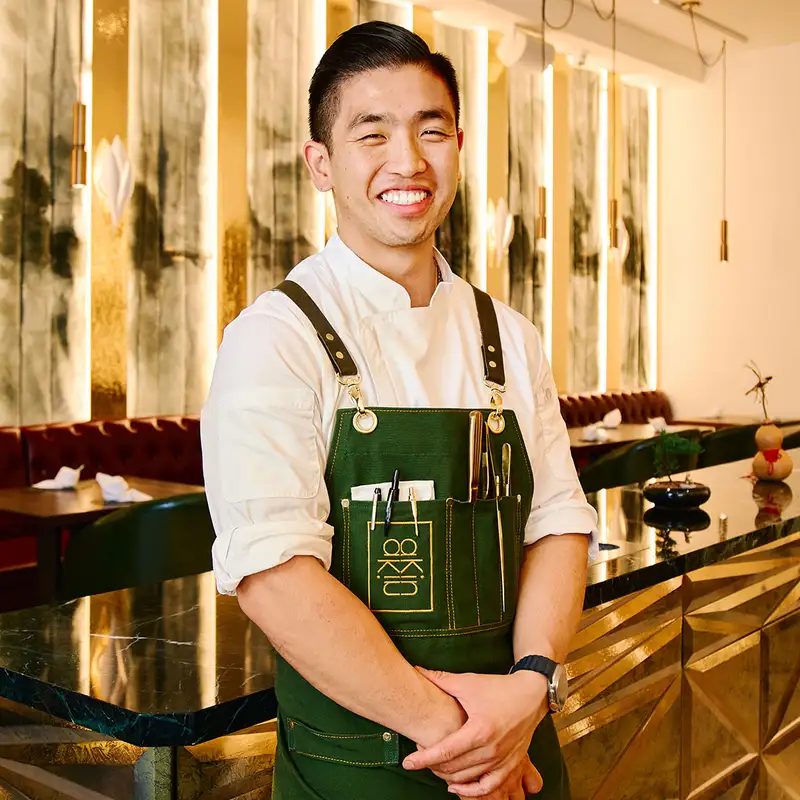
Alex Abbott Boyd:Hey, everyone. Welcome to Tasty Notes to run. I'm Alex Abed Boyd. This episode, I sit down with chef Eric Chaw. In 2025, chef Eric was named by the Michelin Guide as the most promising young chef in Toronto.
Alex Abbott Boyd:And his restaurant, Akin, earned a Michelin star, the only restaurant to earn a star in Toronto last year. Chef Eric has an incredible story. Just after graduating college, he entered and won MasterChef Canada's first season. At 22, he opened his first restaurant, r and d, where he actually worked as a sous chef, hiring a head chef above him to teach him the robes of running a kitchen. Later, when the Michelin guide came to Toronto, chef Eric decided it was finally time to go all in on earning a Michelin star, opening akin to showcase his take on modern Asian cuisine.
Alex Abbott Boyd:If you're curious what chasing a Michelin star really looks like behind the scenes, you're gonna wanna stick around. Just a quick note before we begin that if you've been enjoying our episode, a quick rating or thumbs up really goes a long way to helping other people discover the show. Here's my conversation with chef Eric Chong. Chef
Eric Chong:Eric,
Alex Abbott Boyd:thank you so much for being here.
Eric Chong:Absolute pleasure. Thanks for making that journey down here.
Alex Abbott Boyd:Of course. And congrats again on the Michelin Star.
Eric Chong:Thank you.
Alex Abbott Boyd:It's funny. I read that you actually had originally planned to be a chemical engineer. What pulled you in that direction early on, and how did you end up pivoting into food?
Eric Chong:I think growing up in an Asian household with strong family values and strong career values, I think in Asian culture, everybody really focuses on, like, confident careers that your family can be proud of. Parents really wanted me to either be a doctor, lawyer, or an engineer. I wasn't very good at biology. I didn't really wanna argue too much, so I went with the engineering path. So I tried computer, mechanical.
Eric Chong:Chemical was the one that seemed to fit me most. And then I pursued that, finished, graduated, worked as a chemical engineer for six months. And then I for sure knew it wasn't for me. Okay. At least like during school I was like, oh man, I'm not really that passionate about this.
Eric Chong:It's not really for me, but my parents always said you can decide after you get a degree. At least finish graduating and get a degree, and then you can decide.
Alex Abbott Boyd:So when did food start to become a bigger passion
Eric Chong:of yours? Food was always a passion of mine. There was photos of me when I was like six years old folding dumplings with my grandfather. My whole family like revolves around food. My grandfather was a self taught dim sum chef.
Eric Chong:My mom's also an incredible cook. Everything was around food, and I was, like, a really fat kid growing up. Loved to eat. And then I did always want it to be a career of mine, but even my grandfather was, oh, don't do it as a career. Like, the hours are long, blah blah blah.
Eric Chong:And then my parents were, no. Don't do it. You're not gonna make any money. It's just me working long hours. And then eventually, we would always watch cooking shows together, whether that's Food Network or MasterChef.
Eric Chong:And when it came to Canada, I just thought it would be fun to to just apply for fun. I didn't think it would be the career it is today or led me to where I am today.
Alex Abbott Boyd:So you thought you would apply to MasterChef just to have that experience of being on it?
Eric Chong:I just thought it was a good opportunity to potentially be on a show that I've watched with my family for many years. We were watched The US version, like seasons one through five, six. So six years of watching Mass Chef US with my family. And then my mom's hairdresser was like, hey, Mass Chef's coming to Canada. She's, oh, cool.
Eric Chong:Here I'll tell tell my son to join. And then I casually like, yeah, sure. I would like to join. But if I'm gonna commit myself to something, like anything, whether that's engineering or anything I apply myself to, I wanna give it my all. So I don't wanna really wanna do it, like, any half measures.
Eric Chong:So I quit my job and started training. Okay. Like self isolation in my home kitchen and just training.
Alex Abbott Boyd:How long did you have after you had applied and they said, okay, you're gonna be in this first season until shooting? I had about two to three weeks. Okay. Oh, that's not
Eric Chong:Not too long.
Alex Abbott Boyd:Not a lot of time.
Eric Chong:Yeah. Because, like, I actually got missed in the live casting call, I thought I didn't make it on the show. There's, like, a huge application process, but yeah, I literally got the call when I was in Cuba, like vacationing with my friends. Okay. Hey, you're in the top 50.
Eric Chong:We're gonna start filming in a few weeks. And then that's when I, like, quit my job, came back, and just started, like, testing recipes and just training.
Alex Abbott Boyd:Did you think that maybe because it was a show that you had watched with your family, it was a way into the food world that they would understand? I think had I not won,
Eric Chong:for sure, would not be a chef today. I needed to win to get the accolades, open the doors, to get my family and parents' approval for sure.
Alex Abbott Boyd:Do you feel like yeah. I I had heard you say that or maybe I read that you had said that somewhere that if you didn't win, you weren't gonna continue in food. Like, what if you had come in second? You still don't think that would have been enough to to earn the right to permanently quit engineering?
Eric Chong:Not in my parents' eyes, I think. At least if you won, you're something that your family can be proud of. There's something they can stand behind. Asian culture is really about, like, face. How much you can brag about your children.
Eric Chong:Nobody really wants to talk about your son came second place. Now he's trying to be a chef because there will always be that doubt. If you can't even beat, like, another home cook, why are you gonna compete against professional chefs?
Alex Abbott Boyd:What happened for you after winning?
Eric Chong:So after winning, I went to literally, on the finale night, after I got the awards and shook the judges' hands, Malvin was like, hey. I want to bring you with me to Asia and train you. I wanna take you under my wing. And I was
Alex Abbott Boyd:like, oh. He was one of the judges?
Eric Chong:He was one the judges. Yeah. So I was very taken aback by that because at the time, he was like a celebrity chef. Like, he had two Michelin stars. So I was like, yeah.
Eric Chong:It was a lifetime opportunity. Of course, can't say no. So then the show wrapped up around October, and then he flew me out in December to do an event with him in Singapore. And then I worked with him at his two star restaurant, Bonavation, in Hong Kong for several months. At that time when I was with him was the same year he got ordered three Mission Stars.
Eric Chong:And this
Alex Abbott Boyd:this is your first experience cooking in a kitchen too?
Eric Chong:In a professional kitchen? Yeah. So, like, in the event, the event that I did, the very first one I got thrown into was, like, for about 600 people in Singapore, and it was crazy. The hours were insane. It was, a twelve, fourteen hour a day, which at the time was, like, unfathomable.
Eric Chong:Here, it's now it's, like, the norm. Right? Yeah. But, like, back then, when you're not used to it, your neck hurts from looking down. Your wrist hurts.
Eric Chong:Like, everything, you're just not used to being on your feet that long. Yeah. And that's kinda like a huge eye opener, but it was everything I ever dreamed of. Yeah. I loved every moment of it.
Alex Abbott Boyd:Why do you think he chose you to do that? Do you think it's just because you won, or you think there was something more that he saw in you?
Eric Chong:I think he saw, one, a lot of potential, but two, a little piece of himself in me. He was also a self taught engineer or not. He was also a engineer by trade and then a self taught chef. So it's the same thing as me. I went to school as an engineer.
Eric Chong:We had a similar mind, similar way of approaching food and thinking about hospitality. And then being self taught, you can actually being an engineer and self taught, can learn quite similarly in the fashion that he learned.
Alex Abbott Boyd:Do you think that engineering, especially the chemical engineering background, do you ever incorporate some elements in your cooking? Maybe like the molecular gastronomy or those kind of techniques? On paper,
Eric Chong:it it would make sense, but I forgot everything in terms of like chemistry and like periodic table and everything. I I definitely didn't retain any of that, but I think the most important trait of going to school of engineering was your thought process, the way you you approach business and actually think about food. Think how to create things logistically, efficiently, how to scale. And, of course, the math is a huge strength. How to work Excel, how to work Word.
Eric Chong:Like, these things that aren't necessarily taught to culinary students have been vital to my success of how to operate businesses and manage people. So I don't regret going to engineering at all because the amount of people I come across in the industry that have very poor math skills. And like math is quite fundamental to what we do in terms of all my recipes are to the gram. When we scale things, it's really important. When we cost things, it's equally as important.
Eric Chong:I don't regret doing engineering in any sense at all. I studied economics,
Alex Abbott Boyd:just similar ability to get really good at math. You wouldn't think you need to do that to start a wine business, but I found it very helpful for pretty much the same reasons. Now Alvin wasn't just putting you to work in Asia, was he? Was it he was also exposing you to the world of fine dining there.
Eric Chong:Yeah. So that's what's really great about Alvin. I think everybody who's worked with him or been around his circle can vouch for. He will pay for every single meal he ever takes you to. Sometimes he's not even there and he'll still pay for the meal.
Eric Chong:Because he's he finds it the best way to learn is by experiencing people at their best. So I try and pay it forward and do the same for my staff. But, like, when I went to Hong Kong, the very first meal, he was like, here. Go to this restaurant. It's a two star French restaurant called Amber.
Eric Chong:They recently got their third star, I think, last year. But he didn't even go. Like, he just sent me a loan. He gave me his card, and he's like, don't worry. I'll take care of the bill.
Eric Chong:And that was like a 700 Canadian dollar bill, which is think about this ten years ago, it's very expensive. Yeah. Like, even to this day and age, but you can't even find something like that in in Canada. So first of all, it's my first Mission Star experience. Getting to experience, like, the level of service, the caviar, the wagyu, truffles, the foie gras is completely eye opening to, like, you back then, like and without putting down other restaurants in Canada, I've had tasting menus in Canada, like, I would say a 10 out of 10 for me ten years ago, especially going with my family, was like, aubergine, example.
Eric Chong:That's I was, like, blown away. Wow. This is incredible. And then you experience something that's just, like, genuinely miles above Yeah. What they were.
Eric Chong:It's just like, wow. Didn't even know food could be this good. And then you have bonervation. At the time, it was like super creative. The stuff that he was doing is just I wouldn't even have he could have ran a thousand simulations in my head.
Eric Chong:I would have never created dishes like that at that time. Right? So it's like completely opening eyes to a whole new world of cooking.
Alex Abbott Boyd:Yeah. It sounds life changing. Was there any moment just being dropped into professional kitchens working at this level, working for Alvin where you thought, wow. This is a lot harder than I thought it would be. Maybe my parents were right, or was it like these experiences of seeing what was what the potential was within cooking, did that just excite you so much?
Alex Abbott Boyd:It was like, okay, let's just push through this learning curve.
Eric Chong:I think there was a mixture of both. I don't think it's one or the other because on one hand, it was obviously way harder than I thought it would ever be. Like, those hours keep in mind, I'm, like, also jet lagged. The amount of strain it puts on your body and to see the technical prowess of all the people around you is, wow, this is really intimidating. You think you're on this, like, high of, oh my god.
Eric Chong:I just won Mashed Chef. And when you see it on TV, everyone's like, man, that guy must be so good. I can't wait to be one of those guys. And then you just get surrounded by people that have been cooking for years, and you're like, man, I am so bad at what I'm doing. I I everybody everybody in the kitchen, even the lowest calming, could cook circles around me.
Eric Chong:Yeah. So, like, moving this cooking show means nothing. It show it really puts you in your place, and I think it was important to keep you humble. But at the same time, yeah, it was difficult. I was doubting myself.
Eric Chong:But being as stubborn as I am, I also don't wanna prove my parents right and be like, yeah. You're right. It was too hard. I just wanna go an engineer. I just wanna spend all this time convincing them that I do wanna cook as a career.
Eric Chong:So, of course, I'm gonna pursue it and Yeah. Power through it.
Alex Abbott Boyd:If there was, like, one or two biggest takeaways from that time, what would it
Eric Chong:be for you? I would say the biggest takeaway is probably knowing that there is always somebody miles above you. Yeah. I think yeah. Because a lot of people who don't I wanna say this in the most positive way possible.
Eric Chong:Like, a lot of people who strictly dine in Toronto that don't dine around the world, that consider themselves foodies and they know what food is, it's very narrow minded, I would say. But then getting to travel, getting to see what is perceived as, like, truly authentic, and to experience this high level of cuisine is is completely eye opening. Yeah. And I get both people's perspectives because there is so many people that just stay in Toronto or that that love Toronto and believe that what they're having here is authentic. So it's understanding their point of view to be able to create food that they'll enjoy as well.
Eric Chong:Because, yeah, I'm sure we'll get to it, but when we open R and D, there's definitely those challenges.
Alex Abbott Boyd:When you say the word authentic, is that kind of a reference to having had, say, different kinds of Asian cuisine here versus when you're actually in Hong Kong and visiting Singapore and places like that? Or do you are you meaning something else?
Eric Chong:I would say a big learning curve, and this is like, when we open R and D, for example, we spend all of our time research and developing Yeah. The menu in Hong Kong. So I would be working night shifts with one of his chefs. So while they were closed from 12AM to 8AM, essentially, like, Canada time
Alex Abbott Boyd:Yeah.
Eric Chong:I would be working in their kitchen with one of his sous chefs. And we would be making super authentic flavors. When I say authentic flavors, we would make oyster sauce from scratch. How it should probably be made with fresh oysters, dry oysters, have this really pure oyster taste. Yeah.
Eric Chong:That's one small example. But everybody here in in Canada, when they have oyster sauce, they're used to the taste of Lee Kum Kee, which is like very umami, salty. It doesn't really have much oyster flavor. That's why even every even a lot people with oyster allergies and shellfish allergies can have Lee Kum Kee oyster sauce. This is like barely any oysters.
Eric Chong:So when we launched the menu at R and D and people start tasting like the oyster sauce that we're using, they're like, woah. This tastes like really weird. However, I would say even now, like, lot of people argue, oh, we want authentic taste. We want authentic. But what they perceive as authentic may not be authentic.
Eric Chong:It's authentic in theirs their eyes, but what's authentic in in my eyes is is different because it's what's actually done in where the dish is from. So it's a huge eye opener where it doesn't really matter what people say. It's you have to try and view it from their point of view. Like, they think it's authentic. It doesn't matter what I think Yeah.
Eric Chong:Where I'm serving them. Yeah. Of course, I'm gonna have to use Lee Kum Geek. Like, we need to dial back what is actually authentic. Like, you go to Thailand and you taste the any of their curries.
Eric Chong:That shit's spicy. That is spicy. So when you talk about, like, authenticity Yeah. And I'm sure we have to dial it back here, people are not ready for, like, authentic Thai spicy. Yeah.
Eric Chong:Like, proper pad kefow. It's like garlic, chili, like, really intense flavors. You have it here. It's much more toned down. Yeah.
Eric Chong:But people love it. So in that sense, it was a huge eye opener as to run running a business. So you mentioned r and d.
Alex Abbott Boyd:I'd love to hear about opening that restaurant. You mentioned you're working for Alvin. You're were you working like a full day shift in his kitchen and then the night shift again? So
Eric Chong:It's kinda the whole story was I worked at event with him, like, multiple events around Asia with him. And then probably spent around six months total in Hong Kong working at Bonavation just as a call me as a cook. Yeah. And he was, like, super gracious. He found a place for me to stay, paid for all of that.
Eric Chong:He offered a salary, which I declined because I was just like, I really just wanna learn. You're already doing so much for me. He paid for my flights. Anytime he'd free be free, he'd take me out to these, like, nice restaurants. And that's where I really developed my palate.
Eric Chong:And he was just yeah. The most he could've ever done was just like take me to all these places where I could never afford. Anytime he had an event in like different parts of world, Singapore, Thailand, he would bring me along. And I'm like totally not qualified to be along with these. But then, not only would I get to work in these events on a large scale with all these new people and new ingredients, he would then also take me to the best restaurants in those cities.
Eric Chong:And then after that, after the six months, he's, hey, I wanna open a restaurant in Toronto with you. And I was like, okay, well, that's totally not what I expected. But it has been a lifelong dream owning a restaurant. And he's like, okay. Neither of us have ever had a restaurant in Canada where you're obviously gonna need a partner because you're just a you're just a nobody.
Eric Chong:So he How approached
Alex Abbott Boyd:old are you at that point? Like, 22,
Eric Chong:23? 22, probably, at this point now. Yeah. I was 21 on the show, and then, yeah, we passed December, so 22. And then he's like, hey.
Eric Chong:I'll ask Michael at Boncini, who had O and B, and, like, they're on the rise. They just opened up opening restaurants left, right, and center. Yeah. And then Boncini accepted. And then that's when we started, like, r and d ing the menu.
Eric Chong:So I guess where are we now? We're approaching eleventh year being open at r and d. So that means we opened 2015. I think I won matchup at twenty '13. So then, yeah, there's a whole year of just flying back and forth from Hong Kong, developing these recipes, not really working.
Eric Chong:Sometimes I would work shifts, but then for the most part, we were just developing the menu. And then we come back, do all the soft opens, and and launch.
Alex Abbott Boyd:So what was your vision for r and d?
Eric Chong:I was it was pretty challenging because I'm so new to the industry. At the time, I was really along for the ride. I wouldn't say I had that much input in terms of menu because I'm gonna lean towards Alvin. He's Yeah. He just got his third star.
Eric Chong:Who am I to have any input? And then Bongini, who's who's been opening and operating restaurants, I'm learning from him. Yeah. I have no real say. So it's a bit challenging for me to say what my vision was because I was purely a partner and just happy that I'm getting a restaurant.
Alex Abbott Boyd:Did Alvin help you navigate the financial side of that? Like figuring out what percent partnership you were, how you structured that?
Eric Chong:Yeah. Just very much. There was I owned a third, Alvin owned a third, Michael owned a third. All my mash up earnings went towards r and d. Didn't spend a single thing towards myself.
Eric Chong:So, like, that full 100 k plus I needed extra from my father to invest in the restaurant. It was about, like, I think, like, a total of about, like, a quarter million each. Oh, wow. So I need an extra 150 from my dad, and then the rest came from the bank. And then OMB handled all the financials.
Eric Chong:I was really so new to this. I wasn't even the head chef of my own restaurant. I'm still learning.
Alex Abbott Boyd:But but that was a conscious decision on your part?
Eric Chong:Yeah. Because it's like because there's no way I'm I'm not so arrogant or not aware self aware of what my capabilities are. Right? I've been experiencing what it's like in motivation. It's like, I can't run this.
Eric Chong:I wanna learn from somebody. And it's yeah. It is a weird dynamic when there's people being hired and working. They're like, oh, the owner's here, but there's another chef that I'm reporting to. Yeah.
Eric Chong:So, yeah, it was a bit weird to navigate through. I feel like a lot
Alex Abbott Boyd:of people, if they had won this big TV show and then worked in a three star restaurant and had all these experiences, yes, it was maybe six months of work in these restaurants, but I think there are a lot of people that might just say, okay. Now I can do it myself. I might make some mistakes, but I'll learn along the way. Whereas you said, you know what? I know my strengths and weaknesses.
Alex Abbott Boyd:I still have time to learn. Let me hire a head chef, and let me work for him in my own restaurant.
Eric Chong:Yeah. I think probably if I didn't go to Asia, maybe I would have had that mindset. But, like, right away after MasterChef, you go to Asia. So you don't get to ride, like, any ego of any sort because, like, I remember the night of you're just like, man, I'm the man. I just won this cooking show.
Eric Chong:Like, I beat thousands of cooks. I'm gonna be a celebrity. I can't wait to open a restaurant. Of course, it's gonna be busy. And then you literally, shortly after, go to Singapore and you're like, get put in your place.
Eric Chong:Yeah. You're trash. You're so bad. Like, I don't even know why I thought I was, like, so good because even the basics of knife skills is so beneath what a professional chef can do. You know what I mean?
Eric Chong:It's so hard to paint the picture for somebody else because, yeah, you beat a bunch of home cooks, but without sounding too disrespectful, I think any of my cooks here could easily win Mastery. Gotcha. Without a doubt. Because the stuff that they put up for staff meals, like, way better than some of the dishes I was putting up then that I was proud of. So it's it's really important that after the show, I got put in my place and stayed stayed humble because there's so many people that are miles better than you.
Eric Chong:Fortunately, I've been able to travel the world and try the best restaurants and then really know where you stand. I'm not, like, so arrogant to think that I'm the best in the world, but I'm, like, so not.
Alex Abbott Boyd:I love the humility. I think it's clearly served you well. What would you say are some of the lessons that you learned at r and d, opening the restaurant about business, about restaurants, about cooking? I think we touched on the
Eric Chong:understanding the demographic that is dining at the restaurant is super important. Like, their palate. Because for the first part, whenever you open a restaurant, like, even I was, like, super young and, like, arrogant back then about, I'm cooking food for myself. I'm cooking food that I love. And I think that's a lot of young chefs' mindset.
Eric Chong:Yeah. It's I'm gonna cook the food that I love. Whether they like it or not, take it or leave it. And I remember it was, like, super inappropriate. There's multiple times where I'd be, like, upset when a guest wouldn't like the food.
Eric Chong:Rather than now, it's if they didn't like it, I think twice, like, why didn't they like it? Is it something that we should have changed rather than just, man, get this guy at the restaurant. Like, that's the first instinct as a very young, arrogant, immature chef. I remember, like, getting confrontational with a couple of guests that was, like, totally not okay. So there's times when it definitely matured me, I would say, opening r and d and understanding the business side.
Eric Chong:I think the journey of starting with r and d and learning from multiple chefs, learning from o and b, learning that how to read p and l's, how to build and manage inventories has been, like, paramount to my success here at Akin.
Alex Abbott Boyd:It's so fascinating what you say about learning essentially that restaurants are hospitality and you're there to serve. At the same time, don't you think it's important for a chef to have a clear vision and identity as a chef and might not be for everyone? How do you balance those two things out?
Eric Chong:That's a very tricky thing. It's definitely being able to fulfill your vision while satisfying your demographic Yeah. Is the biggest challenge to the restaurant. Because even for akin, I have many visions and ambitions, but I do have to make compromises based on the demographic. I would say, like, R and D's biggest thing was that we're in Chinatown.
Eric Chong:Right? So a lot of people will always say, I can just get the same food down the road for a quarter of the price. Why would I ever dine here? Yeah. So it's like you're always fighting this uphill battle of trying to ex express or explain that we're using high quality ingredients.
Eric Chong:We're doing more inventive dishes than just a typical like chow mein. It's not a standard roasted duck. Ours is like brine, dry aged, slow cooked, etcetera. But I think it just takes time to to get that message across. Nothing comes quickly.
Alex Abbott Boyd:What did you find was the best way to do that? Is it on the menu? Is it what servers explain on the floor? How did you best communicate that?
Eric Chong:I I think eventually the food speaks for itself. It just takes a lot longer for certain restaurants than for some restaurants than others. Yeah. I genuinely believe word-of-mouth is the best marketing. As long as guests are happy and are spreading the word, eventually you will be busy.
Eric Chong:Because, like, we we've tried marketing pushes and all that. Yeah. I guess, like, a small little burst, but it's not sustainable if people aren't really resonating with the food. And I think you can tell right away. I think a big turning point for r and d when we really started making a substantial amount of income was after COVID.
Eric Chong:During COVID was, I think for a lot of chefs, really depressing, not being able to serve guests and putting your hard work into takeout boxes. But I took that time and really developed my skills as a chef after years of working as a professional. How can we make this better? How can we do better? And after we started, those menus after COVID were the best menus that we ever done, and those are what solidified our signatures to this day.
Eric Chong:Okay.
Alex Abbott Boyd:Was it just the time to reflect a little bit and Yeah.
Eric Chong:It's so rare to actually have time to develop. Because when you're operating a restaurant, you have to prep the existing menu, do service, and then in the small hour of time that you have, develop this menu, and then develop this one dish. But to actually have, like, months, time is never a chef's friend. You know? You never have enough time.
Eric Chong:But to actually have months to work on yourself as a chef to have proper, like, rest, to just work out whenever you want, to take breaks, to just focus on what you love is a once in a lifetime. Like, you'll never get that operating restaurant unless you have unlimited funding that you can just close a restaurant for one on one, keep all your staff employed, and then just keep keep working on menus because we are fortunate that you get some government subsidies that can help sustain some of the burden. That chance will never come again. Especially for someone leaving a restaurant alone. Yeah.
Eric Chong:You just don't get these opportunities where you just have weeks to work on a menu. Yeah. I would be disappointed in myself if I couldn't come up with a good menu in weeks. How did the food evolve? It's just finally applying what I've tasted throughout the years.
Eric Chong:Like, dining at these other mission restaurants and higher end restaurants. I'm, like, self aware enough that I can taste something and be like, okay. This is definitely not up to par with these other restaurants. And then just slowly refining your food, using better ingredients. I I think the approach worked a bit differently.
Eric Chong:I approached food a little bit differently where I chose the ingredient first and then made a dish around it because I I wanted more premium ingredients on my menu.
Alex Abbott Boyd:You keep referencing or have referenced several times dining at Michelin starred establishments, trying to hold yourself to that standard. I feel like that leads very seamlessly into kind of where we're sitting now, which is a can. I think one of the things that really stood out to me and made an impression to me just as a wine supplier to Akin is months before you'd open. First time I sat down to taste wines with your sommelier, it was put on the table like we're going for a Michelin star that's being very vulnerable because you're just telling the world what your goal is, And so it'll be so obvious if you don't achieve that. So I think it it takes real courage, but I guess I'd be curious.
Alex Abbott Boyd:How did you know you learned enough at r and d and it was time to to open up akin?
Eric Chong:It was a lifelong dream to be a Michelin star chef. That's like the whole goal. I think every ambitious chef who gets in the industry, of course, you want your own star. For a long time, that dream was out of the question. The Michelin wasn't even in Canada.
Eric Chong:And then mission came, they asked R and D to launch it with Cafe Blued, and then literally that year, like, Alvin and I agreed, okay, it's time to open a fine dining restaurant. Like, he knew from the start that was my lifelong goal, doing a fine dining restaurant. I said then in, like, many interviews even during R and D, and everyone's all, why r and d then? Why not doing fine dining? It's the first restaurant.
Eric Chong:I need to learn how to operate restaurants. I don't wanna start off with fine dining because the based on what Adam told me and based on my experience, if you don't know how to operate, like, the margins for fine dining is way smaller. Right? Right? Because it's just way more risk.
Eric Chong:There's so much overhead. Whatever. And then we spent two years looking for a proper location. Finally found one. Then after that, it took two years to build
Alex Abbott Boyd:or staff up. What was it about this location? And what made you want to leave Chinatown? It's still Chinese and Asian inspired cuisine.
Eric Chong:Was it
Alex Abbott Boyd:as a conscious decision to leave Chinatown?
Eric Chong:Not really a conscious decision. We just wanted something centralized. To me, this is quite Central Toronto. Like, King and Church is the center's gonna be because being a Tasty Mania restaurant, you know you're gonna be a destination restaurant. You're not gonna get walk ins.
Eric Chong:We're gonna be reservation only because we need to prepare the food. So knowing that you need to have a destination that is as centralized possible, pulling from Markham, Scarborough, Beaches, Mississauga, Oakville. To me, this is close to a highway exit, and all those different cities can come here. That's the ideal place. Obviously, this is this one spot had the potential to become our tasting menu, but it's not our number one or it's not the perfect scenario because we had to build it from nothing.
Eric Chong:There was, like, so much more added cost because it wasn't an existing restaurant.
Alex Abbott Boyd:What was here before?
Eric Chong:It was vacant for five years, but it was, like, a super old Indian restaurant. So they had some HVAC. Downstairs was offices, which we had to then add plumbing and everything, and then that's it. And we had to add the stairs in the front, but it was totally not ideal.
Alex Abbott Boyd:Yeah. And what was it like because ONB isn't a partner. No. This was when you stepping out on your own, was that what was that transition like to not having that back end support?
Eric Chong:It was equally satisfying to know that after, like, several years of operating R and D that I could do it on my own. So it was me getting the bank loan on my own. Me getting the health and safety, the fire inspection, getting my liquor license, setting up the website POS, finding an accountant. Yeah. I did all of that.
Eric Chong:Like, from ground up, I can confidently say I can open a restaurant on my own. Alvin was obviously an investor. He inputted in the menu. And then when we went severely over budget, we got a another partner to invest. But in terms of what is put in this restaurant, I had to sign every single thing was my signature.
Eric Chong:Designer, contractor Yeah. Equipment, everything. And, yeah, it's a lot of work. It was it was, like, stressful beyond belief. Yeah.
Eric Chong:But it's satisfying knowing I could do it.
Alex Abbott Boyd:A 100%. What was the vision beyond fine dining? What did what story do you want to tell here? What experience did you want to give guests?
Eric Chong:When we've opened, I wanted guests to know that we that I thought of everything. Whether that is in the console. There's everything in there. Glasses, cutlery, a place to store our wine. We have drawers there for people's purses.
Eric Chong:I wanted them to never be like, oh, I want I need something and us not have it. I have branded reading glasses in case they forget it. I have phone chargers. I have blankets in case they're cold. I want guests to feel comfortable and to know that anything that they could need, I would have.
Eric Chong:That's number one. And then number two was to try and offer a unique dining experience that Toronto isn't offering. And when it comes to tasting menus, there is French, Italian, like, everywhere, Canadian cuisine, and then a lot of omakase. But there wasn't necessarily a global Asian focused tasting menu. Only restaurant.
Eric Chong:Right? Yeah. There's the Pine at the time, but I'm in in Toronto. So knowing that, I wanted a very unique cuisine and experience and for it to be at least on par with the other tasting menu. And I think we we accomplished that.
Alex Abbott Boyd:What are some of your favorite dishes that you've come up with you and the team here so far in the time
Eric Chong:you've been open? I think it's hard to pick a favorite because it's like picking a favorite kid, but the ones that the guests have resonated the most with would be one our lobster with laksa. Everybody seems to really like laksa and always says, oh, I can't find laksa in Toronto. I was like, that's exactly what we're going for. We wanna offer things that aren't necessarily available anywhere else.
Eric Chong:And then most of our one bite, like, reverse spheres, everybody loves the experience.
Alex Abbott Boyd:What is a reverse sphere?
Eric Chong:Our spherefication. Sorry. Perfect. But the technique is reverse spherefication. So it's always like a one bite mouthful that bursts.
Eric Chong:So when we opened, I think the one that you had would have been like our hot pot. And then we've done like ginseng soup, tom yum, Hainan chicken rice, xiang bao, and our current one is pho. So it's a one bite pho burst.
Alex Abbott Boyd:Are there any dishes that have been so popular that you just feel like menus might change, but with like this dish is gonna stay, or is it total menu flips every time
Eric Chong:you eat? We're currently on our seventh menu since we opened just over a year ago. We change it every two months. I'd say one of the more recurring ones has been our our caviar beignet. Just yeah.
Eric Chong:Everybody loves, like, a donut with caviar sour cream.
Alex Abbott Boyd:Yeah. I think that was in the opening menu. Yeah. I remember that. That was
Eric Chong:really good. But It's currently on our seventh. It's currently on our menu with scallion snow, a smoked kombu, sour cream, but we will be removing it for the Chinese New Year one. We just need to take a break again. Yeah.
Eric Chong:Maybe it'll come back.
Alex Abbott Boyd:Cool. And how often does the menu change?
Eric Chong:Every two months on average. Seventh menu in thirteen months.
Alex Abbott Boyd:Okay. And then you mentioned just in the context of what a gift COVID was in some ways for you to take this time to really refine your technique. How do you find the time with the team to work on new menu items? Like, is it a solo thing? Is it something you work with a couple staff members on?
Alex Abbott Boyd:What is that kind of creative process like?
Eric Chong:Well, it's definitely a whole team effort. There's no way I could do what I do here without my team by any means. You you always have to find the time. Like, the hours just get much longer. There's no nice way of saying it.
Eric Chong:But, like, our most technical menu was probably the one leading up to Michelin, which was our sixth menu, our street food menu. That one had the most technique and the most labor involved because prior to Michelin, we were super slow. Like, in the summertime, it's usually slow when we don't have a patio and whatever, everybody's out. But at the same time, it was like, I think the economy was in a really bad place if you think about May. Right?
Eric Chong:So, like, we had a dim sum menu that was really good. And then with all this extra time of being so slow, we're like, let's do a banging, unbelievable menu so that once the Michelin is announced, which we all knew was September, that when people come in to try the restaurant, that they'll be like super blown away. So having that extra time definitely reflected in our menu. And then post Michelin, it was like, holy shit. This is so labor intensive.
Eric Chong:Everybody's working like sixteen hour days, six six to seven days a week. It's unsustainable. We need to change the menu fast. Yeah. And then this menu is a good reflection of all of our six menus that can be executed in volume, super delicious, super well composed and refined.
Eric Chong:So it's a good menu that kinda reflects our journey of the year. And then the next one will be another I don't wanna say like super labor intensive, but a bit more intricate after that. But yeah, it it definitely reflects how much time we have. Because this menu, I would say, it's really good, but if you have had every menu prior, you would see a few repeats because we just didn't have the time to fully develop another full 10 courses, but the next one will be another new 10 courses.
Alex Abbott Boyd:I'm excited to get into the the Michelin story and what happened when everything came out. But you referenced before the guide was released towards the end of last year, things were a little slow. What was that? What was the first year, like, open, and how did you find Toronto responded before there was this very well known accolade attached to the restaurant?
Eric Chong:It's hard because the first year of any restaurant with the artist, but especially doing just what we're doing, extremely ambitious. Without any accolades, people are not gonna spend that amount. So when we first opened, our menu was $2.75 for the dining room and then $3.50 for the chef counter, which is above most tasting menus in in Toronto already. But that was just the cost it was to just use ingredients that we needed. So, like, to have the uni, to have the foie, to have the wagyu, to have the caviar, all of that to make your margins.
Eric Chong:So you can't really look at it like the first month of any restaurant. I think the first month of any restaurant should be pretty busy. Because it's like a new restaurant. Toronto is like always looking for something new. So December was great.
Eric Chong:Like making money in your first month of a restaurant, like, super good. January comes along, starts to trickle off, you're like, okay. I guess, like, the opening wave is slowly coming down. And then you start wondering, oh, why? Is it because the food's bad or it's too expensive?
Eric Chong:And then February, Valentine's is always super busy, so you're still good. And then March comes and you're just like, oh, yeah. Yeah. This is the now now you start to worry. Because now you're like super slow.
Eric Chong:And then I know that every year, September is Michelin. Right? We have half a year before Michelin. Yeah. So then March and April was like, my god, it was bad.
Eric Chong:It was really slow. You started to have like shareholders meeting, see, oh my god, we need like emergency funds. Everybody's on salary. Right? Yeah.
Eric Chong:So like the overhead is insane. The amount of ingredients that will spoil if you don't have business for a fine dining restaurant is catastrophic because we we need the fresh ingredients. So like, uni, for example. Like a flat of uni is, let's say let's just say 60 portions, just roughly 60 portions. Are you doing like 15 covers a night?
Eric Chong:I don't wanna hold a flat of uni for four nights. Yeah. So you have to now you're just giving people more uni or you're throwing it out? Yeah. So now your food cost goes up.
Eric Chong:Your labor's the same because you're on salary, and now your margins are just like, choop. Yeah. Click on. So my vision is slowly starting to slip. Because when we relaunch, I want it to be a full blind tasting menu.
Eric Chong:I don't wanna post any photos of the food. I want only the people that dine here to see the food and to not I find it's a much more immersive experience when you don't know what the menu is Yeah. And you fully trust the chef. But without any accolades and without anybody any other restaurant doing what we're doing, it's a really hard sell. And I get that.
Eric Chong:Because they don't have a star. Why would why should I go there? I have no idea what they're doing. What is modern Asian cuisine? Nobody even knows what that is.
Eric Chong:It's like, don't get what they're doing. What is it? Is it a Chinese restaurant? Why are they charging so much for a Chinese restaurant? So there's so many question marks, and then you have these meetings of, okay, I guess we need to post the menu.
Eric Chong:So people at least have an idea of what we do. And then even reading the menu is not a good indication of what we do. Even currently, I post the menu, but like, on the menu says one of the dishes says pho, beef, Thai basil, noodles, whatever. But what you actually get is like a sphere. It's totally not anything indicative of what we do.
Eric Chong:So like, it's an idea of kind of the cuisine that we do, a little bit of story, but you still won't know. There's a dish called tied to table. We're using caviar, lobster, uni, crab. But the description just says, bone, liver, flesh, egg, skins. Because I'm using five components of the fish.
Eric Chong:So now people don't really care because we have our star. But before then Yeah. I need to start leaking out photos of the dishes so people can actually see like the cool stuff we're doing. Yeah. And then shareholders are like, no, we need do a la carte.
Eric Chong:People are just not doing tasting menu. We need to a la carte. And I was like, I don't wanna do a la carte. You're gonna completely fuck off. Fuck off my whole vision.
Eric Chong:And I don't wanna risk Michelin either. Because like, now you're gonna start letting standards slip. Now you have dine like tasting menu, a la carte, you have twice the amount of inventory, twice the amount of waste. It's really hard to manage. So I'm just like, we just need to power through.
Alex Abbott Boyd:Yeah. Was interesting because earlier you said one of the lessons of r and d was a little bit of meeting your guests where they're at. But in this case, in this very challenging first year, you had the conviction to stick to at least the format of the restaurant.
Eric Chong:There's a huge difference in the mindset. One, I'm way more experienced now. But two, it's not that the guests weren't resonating with the food and I had to adapt. It's that the guests weren't coming.
Alex Abbott Boyd:Yeah. They just weren't
Eric Chong:That's big difference. It's I'm not adapting to the demographic because I know the demographic exists. I know Aloe's full every night. I know people are there for tasting menus and are dining out. We're just not recognized enough for them to dine here.
Eric Chong:So it's not that I ever had doubt in the food because everybody who came and dined here loved it. Whatever. That's bullshit. Like, 90%. Okay?
Eric Chong:Majority of people who dined here, like, absolutely loved it and was like, I can't wait to come back to try the new menu. It's getting new people to be aware of what we do and to trusting spending that amount and coming in blind. Because it is a big ask from a lot of people. Because, like, you're saving up for it. It's 10 courses that you have no idea what to expect.
Eric Chong:Yeah. But once you get the accolades, I know they can then have trust. It's okay. Like, we are now a lot of guests, like, mission restaurant. A lot of people say that was my first time dining on a mission inside restaurant, but they're only coming because we have a star.
Eric Chong:Yeah. So powering through those six months was financially draining, mentally draining. It was not good. So then summertime is like super slow. We decided to close an extra two days just to give the existing staff, opening staff, like a good work life balance.
Eric Chong:Because, okay, we're gonna lose money anyways. Everybody spend more time with their friends, family, and it was great. Like, we're only open four days and we just had more time to to do other things, to go see movies, hang out with friends, to Yeah. Spend time with family. Like, we're losing a lot of money every month, and there's a risk of fine dining.
Eric Chong:And then Mission came around and, like, literally one eighty the business drastically. Like, we we made all of back within two months.
Alex Abbott Boyd:Do you think do you think the restaurant could have kept going if it hadn't gotten the star?
Eric Chong:Hell, though. Hell, though. There's no way. There's there's If we didn't get a star, that's the amount of pressure that it was, though. Because I don't think people understand the the all in, like, risk of going for a star.
Eric Chong:Okay. The amount of financial burden. One, if imagine if we didn't get a star. Not only would we need to find another half 1,000,000 to float us for another year, the amount of staff that we would probably lose Yeah. Because who else could mentally go through another full year Yeah.
Eric Chong:Of being like, okay, I'll chase a star with you again. They'll probably just go work at another starred restaurant. Yeah. Although we are unique, although it's fun working here and whatnot, it's like, you you have to be real. A lot of these members would be like, I don't know if I can stick it another full year chasing something that may not come.
Eric Chong:Yeah. So it's yeah. I really think that would be the end of us Yeah. If we didn't get the start. Like, that's the amount of pressure, and that's why I was, like, so anxious leading up to mission.
Eric Chong:It's like, dude, if we don't get the start, we're, like, two two and a half years of my life of an amount of funds going into this restaurant is done for. I knew a lot about how the process worked because of R and D, because R and D has gotten a big brand every year. So I knew, like, if they ask for the photos, the invite to fill out the questionnaire, it's a good sign. You're the guide at least. But I've never gotten a star before, so I don't know if it's any different.
Eric Chong:Nothing was different. It's just you just go in there, you go in blind, and you just pray. And that was it. I knew that I was probably getting the young chef award because they had asked for an interview, like, two weeks before the ceremony. And, like, all the questions that they asked was almost the identical questions as they asked the Rafa who won the previous year.
Eric Chong:And then I asked one of our bartenders who works here, Shane. He won the bartender award the previous two years. And he was like, oh, it's the same thing.
Alex Abbott Boyd:He's great, by the way. Yeah. I did a cocktail pairing when I dined here, it was so good.
Eric Chong:Yeah. Yeah. So there's good signs there. And then every single like, you you go down this huge rabbit hole of once they send the questionnaire, they send the description of what they're gonna put in the guide for a kin. And, like, I'm reading the language, and I was like, okay.
Eric Chong:This sounds pretty promising for a star. And then I started, like, reading every single description of every starred restaurant in Toronto and comparing. Does this sound as positive as those ones? Yeah. Or does it sound like the ones that didn't get a star?
Eric Chong:And I was like, okay. It sounds pretty positive when they're talking about, like, the technical prowess coming out the kitchen or whatever. And I was like, okay. And then I start comparing globally how many people get the Michelin Young Chef award and how many of those restaurants get a star the same year. And it was looking like fifty fifty.
Eric Chong:And I was like, oh my god. This is not good. Because Rafa got the Young Chef award and then got a star. The year or two years ago, whatever, David Schwartz got the Young Chef award, Mimi's didn't get a star. So I was like, okay.
Eric Chong:It's not guaranteed that if you get the Young Chef, get a star. And then globally, I'm like, okay. It's looking pretty good. The week before Toronto's ceremony, Colorado's guide came out and I'm like, rapidly like reading it. And like the young chef, their restaurant looks fine dining, looks a lot like we do, didn't get a star.
Eric Chong:And I was like, oh my gosh. Shut up. It's like an emotional roller coaster. Yeah. Know.
Eric Chong:So I was just like panicking. Oh my god. If we don't get a star, I'm like done for. I'm literally, I don't know what I'm gonna do. I'm done.
Eric Chong:And my wife's, yeah, you'll be fine. You just just keep going on. My parents are like, no. You can just do one of I'm like, I can't. You don't understand.
Eric Chong:I can't. This is all or nothing. And, yeah, like, I the staff that are with me today, like, definitely saw the stress it was bearing. Yeah. Because, yeah, if you don't get a I really don't know what we'd be doing.
Eric Chong:What what I where I'd
Alex Abbott Boyd:be today. What was it like that moment you found out? Was it just relief? Was it joy? Did you cry?
Eric Chong:It all of the above. Yeah. Relief, joy, gratitude, satisfaction, validation of all the hard work, everything in one moment. It was like one of the probably the greatest moment of my life was getting the star at that moment.
Alex Abbott Boyd:It's incredible. Yeah. And what effect did it have on the restaurant? You mentioned you made the money back very quickly. What kinda what were bookings like the week before and then the week after?
Eric Chong:Like, it was we were, like, so naive as to how much power Michelin had. Because that night, we booked, like, 700 resos. That night, like, within twenty four hours, 700 resos booked. How many weeks is that? Because we only open one month at a time.
Eric Chong:Okay. So January 1, we open for February. Okay. So in September, we were only open until October. And I didn't even know we could take that many reservations.
Eric Chong:The day after, another 600 booked. So you're talking about 1,300 reservations booked in forty eight hours. And you can just do the math. Like, at a minimum, they're spending $2.50 per person. Yeah.
Eric Chong:So it's that's more covers than we've done the previous, like, three, four months. So it's already, you're just like, holy shit. There's so many reservations, and then we didn't even get since they were already released, we can't even change the format of what we do. We just have to, like, power through and suffer. Yeah.
Eric Chong:Because you
Alex Abbott Boyd:mentioned that you were doing this, like, incredibly labor intensive menu because you're like, okay. We might have ten, fifteen covers a night. Let's Yeah.
Eric Chong:So this is, in my mind, I'm like, okay. Like, after I mentioned, yeah, we'll probably do 40 covers a night, but it's, like, full every night. Like, 60 plus private dining room inquiries. Like, we we had to turn away business. We had to limit reservations just so we can catch up and sleep.
Eric Chong:We had to close an extra day to make sure people can get two days off. Yeah. So there was a lot that we had to quickly adapt and do because we although you want to make your money back right away, it's okay. I'd rather be more difficult to book and create this more create a hype and maintain your standards and make sure your staff doesn't burn out right away. So we, like, staff up.
Eric Chong:We did staff up fortunately prior to mission, but not enough. Like, hired an extra cook, like, two servers. We just need way more. Like, we needed three hosts. We need five servers.
Eric Chong:We need way more line cooks. But, yeah, everybody was, like, riding high and committed to making it work. So I'm fortunate to have the staff that I have Yeah. That are equally as as proud of where they work and as committed to the business that I am.
Alex Abbott Boyd:How long did it take you guys to get, I guess, comfortable with this huge spike in volume?
Eric Chong:We leveled up really quick, like, from going like, busy night for us prior would be, like, 30. And keep in mind, I was doing this one dumpling that would take ten minutes to fold at the time. A single dumpling? A single dumpling. A single dumpling with a 120 pleats.
Eric Chong:It was no. It had 150 pleats. This one dumpling that was like because it looks so dope. Yeah. But like, now you're talking about 50 covers a night, 60 covers a night.
Eric Chong:That's six hundred minutes, man. That's ten hours, dude. I'm like here the whole time. So I was like, you find another way to fold it. Yeah.
Eric Chong:And you just power through and you like level up. So like, at the time, 30 covers was a lot. And then it was like, I can't even believe we're doing 50 every night. And we live capped it at 50. Yeah.
Eric Chong:And then eventually, 50 became comfortable, and then 60. And then there's 70 or, like, whatever, 60 fives after you do PDRs. Yeah. I would say it took us about a month to get, like, really comfortable. And then we changed the menu, and then like, now, it's like a slow night for us is, like, 40 something.
Eric Chong:It's like a cakewalk. It's like people are chilling.
Alex Abbott Boyd:Wow.
Eric Chong:And then 60 is, like, super comfortable because it just becomes a new norm. But, yeah, it was definitely, like, a huge spike in in in business and everything. It's incredible to hear the power
Alex Abbott Boyd:of that. Because, like, someone in hospitality, you hear about it at the stars, and you think, oh, this just means it's gonna be some of the best food. It's gonna have an interesting opinion. It's gonna tell a story. I didn't quite realize the economic implications.
Eric Chong:Yeah. I didn't know it was I don't think anybody could have expected that amount, though. And I think it maybe it was because we were the only one to get a star that year. Normally, there's multiple restaurants, and maybe it's, like, split and divided. But being the only one to earn a star, like, all of that just funnels to one location.
Alex Abbott Boyd:And you mentioned how, like, almost all restaurants are gonna be busy their first month because people just seek out what's new. Has that Michelin bump faded away? Or are you saying it's the new normal is that it's way, way higher than it was?
Eric Chong:Yeah. There's weightless. We're just full every night. Okay. That's It's a good problem to have.
Eric Chong:Yeah. Yeah. For a long time, we even in October, we didn't accept PDRs. We just couldn't handle the volume. But then, like, November, December, we took all the PDRs, and, yeah, it's been very good.
Eric Chong:What have you what's changed for the staff? You mentioned you decided to keep close an extra day. I think I read somewhere you gave everyone a raise. I treat loyalty as my number one value. Right?
Eric Chong:So everybody that sticks with me longer, they always get raises. It's not necessarily, like, right after mission, everybody gets a raise. It's the ones who've been with me. Every three months, we revalue salaries, and I everybody working with me has had their salary increase. The longer you work, though, the more you earn.
Eric Chong:I'm not really a super, like, greedy owner. I like to share in the profits. Take the staff out to to dine. Take the staff out for drinks. I do the same thing that Alvin does.
Eric Chong:Every time I am at an outing with any of my staff, I cover the bill. And it's important because I treat my staff like my family. Because everybody who I hire during an interview, say, it doesn't really matter what your skills are. It only matters if I like you because I see you more than my own friends and family. So if I don't like you, I'm not gonna hire you.
Eric Chong:It's really important that the vibe is there and that you get along with everybody else. And that's what makes it enjoyable coming to work every day. It's because I get to spend I essentially do what I love to do my lifelong dream with, essentially family. How often do you try to take staff out? As literally as frequent as possible.
Eric Chong:There's been times where it's like once a week at the end of every Saturday, we go to high do that, we go to tasting menus, whatever it may be, whenever we find the time. I don't say it's there's an exact calendar, but I'd say the most recent outing was treating my sous chef to Hexagon before Rafa's last last shift. It's important that they taste the best restaurants in Toronto. So I go to these restaurants. A lot of people ask what what you must really love, like, Aloe because I go there so often prior to a kid opening.
Eric Chong:And I was like, no. I go to Aloe because everybody says they're the best. So I wanna see why other people call them the best. Of course, they're good. It's I'm not saying I I don't like it.
Eric Chong:It's just that it's important to see why other people call them the best. So I go to all these places and I go to Pearl and these restaurants that feel like, okay. What earned them their two stars? Of course, I'm curious and but it's tasting that is the most important thing for me.
Alex Abbott Boyd:More generally, having dined at so many of the great restaurants here in Ontario and around the world, what do you think makes for a great restaurant?
Eric Chong:It's challenging because I literally just spent last week, I just went to New York and tried to eat at the best restaurants. So Atomix, which got North America's number one on San Fel Reno's, 11 Madison Park, which has three stars for who knows how long, and see what they're doing with plant based food.
Alex Abbott Boyd:But do they serve meat now? Right?
Eric Chong:Or is
Alex Abbott Boyd:it still
Eric Chong:they sell three courses of of meat now. Yeah. Aska that's doing they have two machinets, and then Noxus is like one machinets, one in the subway. Yeah. And a lot of people are, oh, man, you must really love foods.
Eric Chong:Dude, do you think I'd enjoy dude, my my New York bill was, like, $15, man. I do this because I genuinely wanna see what the best is doing out there. And in my opinion, it's it's a mixture of really good tasting food, but also the storytelling. The storytelling at Atomix is pretty incredible, unrivaled, I would say. You get this card that has it's also smart because, like, you get this card that describes almost everything a server would say with all the ingredients, with the story behind it, a good take home gift as well.
Eric Chong:But then also the food is delicious. It's an incredible balance of explaining why they're so goddamn smart.
Alex Abbott Boyd:You know what
Eric Chong:I mean? It's it's without that card, it's just it is just food. But, like, when it explains in-depth, like, what they're doing to these ingredients and how they're creating the dishes they're creating, it it adds value of, wow. These guys are pretty incredible. Because when you taste it with your eyes closed, you wouldn't know that all these things are going to and, like, the interaction that you get between a server can only be, like, so long before it gets, man, dude, you're draining me.
Eric Chong:Like, I can only talk to a table so long about, like, how long this reverse verification took and all the work that went into it without sounding. Please appreciate it. Yeah. So the storytelling is
Alex Abbott Boyd:And but the card didn't feel that way?
Eric Chong:The card didn't feel that way. No. Because it's like, you can take the amount of information that you want or or not, but, like, it's there for you. Yeah. And, yeah, I think a lot of restaurants are starting to do this.
Eric Chong:I see, like, a card, whatever, visuals and some stuff to fill the gap. That was although it was two and a half hours, it felt like it could have probably been longer if I hadn't took my time reading. But there's just always so much information coming, like, from a server, from the card, from looking at this, from tasting, like, everything. There's, like, all the senses. That's just one example, though.
Eric Chong:Like, dining at, like, Alchemist, for example, that's, like, a six hour tasting menu is 50 courses was also like a once in a lifetime experience where there's just so much happening. There's only ever been like one or two times where I've eaten at a restaurant, and this is like my favorite menu in the whole world, favorite restaurant in the whole world, Disrutar. It's a three star in Barcelona. They also got San Pangaea's best restaurant in the world, I think, two years ago. But that was one of the restaurants that I ate at, and I'm like, man, I am never gonna be this good.
Alex Abbott Boyd:What was it about that spot that
Eric Chong:Dude, there's they're doing stuff that I can't even understand how they do it because they're from El Buoy, so they're doing a lot of, like, molecular stuff and executed perfectly. Like, it was like a symphony. There's times when you go to a restaurant, you're like, you as a chef, you eat and you're like, I could cook at this level. I could do this with the right staff. Whatever.
Eric Chong:You make all these, like, bullshit excuses for yourself. Yeah. If I had the equipment and and money and staff, I could do this. But, like, it doesn't matter how long I have in my life. I could never be that good.
Eric Chong:Like, genuinely, I could never be as good as they are at discharge. Doesn't matter. Like, I you could lock me in a time machine. I just know I'll never be that good. So there's only been, like, a few restaurants like that that I've dined at and, like, holy shit.
Eric Chong:These guys are unbelievable. Is that motivating or is that No. Demotivating. Completely the opposite. That was, the one meal I was, dude, I'm, like, this is the best meal of my life.
Eric Chong:And also, like, equally demotivating because I'm, like, I am never gonna be this good. Because there's just certain dreams that you give up on. You're like, I like, yeah. I like, do I think I'll ever get three stars? No.
Eric Chong:No. Because they're just like the three star level is is insane. Yeah. Lands with people as motivated and self deprecating as you,
Alex Abbott Boyd:but it's that attitude that probably means you will be able to achieve more and more because you're never satisfied.
Eric Chong:Yeah. My wife always asks, like, you keep moving the goalpost. Like, when will it be enough? I don't know. How
Alex Abbott Boyd:is EMP? EMP,
Eric Chong:considering it's plant based, is pretty incredible. Yeah. Like, pretty eye opening. I was like, personally, I would still rather just have meat because what I found impressive was that they're doing stuff that tastes like it's not just plant based. No.
Eric Chong:But in my opinion, it's
Alex Abbott Boyd:You mean it tasted like meat?
Eric Chong:Dude, they had this, like, soba noodle dish, and the broth was, like, so meaty and, like, sticky. And they're like, yeah, it's, like, Koji and whatever, all this stuff. I was like, dude, this is insane. I cannot believe this is plant based. Yeah.
Eric Chong:Like, it it tasted like one of the best broths I've ever had in my life, and it was plant based. Yeah. But for me, it was like, if I'm gonna eat vegetables, I'd rather just eat a vegetable. I don't know. He had this, like, land caviar thing that was like this seed from a tree.
Eric Chong:And then they season it with, like, seaweed and stuff to make it taste like caviar, which is so impressive. And I was just, like, blown away. Dude, they're making stalks taste like meat and, like, caviar tastes like caviar, but from plants. It's impressive. But if it's just a personal thing that I don't personally, if you're gonna use vegetables, I just want it to taste like a vegetable.
Eric Chong:That's all. That's just me personally because Yeah. I'm really against Impossible Meats. Don't know why you'd be saying that, but I just hate people that that try so hard to make a not steak taste like a steak. It's like, dude, I don't know if vegetarians because who is it for?
Alex Abbott Boyd:Because it's like my wife's vegetarian because she doesn't wanna eat meat.
Eric Chong:Correct. Correct. So there's so many vegetarians I personally know and vegans that there are some vegans that I know that like, dude, I I really wanna eat a steak. I'm like, dude, don't be a vegan, veg. That's just my perspective.
Eric Chong:I don't know. I'm like, I'm gonna get flamed for saying that, but then just eat a vegetable. That's it. Like, these plant based things are so expensive.
Alex Abbott Boyd:That that is the thing that got me because I never had their menu because I was just like, even though my wife's vegetarian, we only go together to a place that has a great vegetarian tasting menu. We're still like, that's too much money for a bitch.
Eric Chong:Yeah. Because there was one dish that I did with it was a squash with this delicious, almost like a tom yum curry with it. That sauce was incredible. It would have been so much better with lobster or something like, what the with the protein. It just would have been so much better.
Eric Chong:But I don't know. It was a squash. Personally, as a vegetarian, if I were a vegetarian, I would be so happy with that. But they're trying to be as inclusive and bring people in. I I don't know.
Eric Chong:In my opinion, would have been so much better with the scallop, the lobster, anything.
Alex Abbott Boyd:Did you let them know that or
Eric Chong:you kept that to yourself? Didn't let them know that, but I was very impressed with EMP. Yeah. Super impressed.
Alex Abbott Boyd:Yeah. It's incredible to keep that standard going for so long. I would just be worried. I've been established for so long. Maybe it's getting a little stale, but No.
Alex Abbott Boyd:Their
Eric Chong:creativity is unrivaled. Yeah. It's amazing to see what they can do with dude, I had their, like, their bread and butter course without butter? It's insane. Yeah.
Eric Chong:I couldn't believe it. It's like a sunflower butter with the caramelized onions, and they made this, like, delicious, like, almost laminated dough, like croissant, but without butter. Wow. So they used, like, a sunflower butter and coconut oil, they said. But it just tasted so buttery and so good.
Eric Chong:But, yeah, I was, like, blown away. It's just crazy what they can do with plants.
Alex Abbott Boyd:Wow. That's so impressive. From that trip to New York and maybe any other recent trips, what will you be bringing back for Akin? Yeah. I guess you mentioned the storytelling.
Alex Abbott Boyd:Is there did that get some ideas flowing of
Eric Chong:how to incorporate that even more here? Maybe eventually. When one day we would, like, really push. I think right now we just we're very happy with where we are, and I just wanna keep creating new menus and food. I really wanna be, like, taste and food focused Yeah.
Eric Chong:More than the storytelling right now, personally. And then eventually, when we're a bit more developed, then I'll focus on the storytelling. But I don't know. Even Alvin's motto is taste is king. So I really just wanna make really tasty food and new flavors for guests to to have.
Alex Abbott Boyd:Shifting gears just a little bit. For people who want to really succeed in hospitality at a high level but still have a family, are there any advice you can share? You mentioned a supportive wife. What do you think are the keys to making it happen just because it can be so challenging with the hours and working every weekend and that kind of schedule?
Eric Chong:I don't wanna speak from a point where it sounds like I have everything figured out. No. It's it's definitely straining on the family and the relationship. But end of the day, like, I I tell every ambitious chef, it's a passion driven industry. You have to genuinely be really passionate about what you're doing because, like, where we are, and my example, I'd say is a very small sample of many chefs out there.
Eric Chong:Right? There's a lot of chefs out there that may not earn the same amount of income, may not get a family just because the hours work. Fortunately, I found my wife before I really dove into the restaurant industry. I met her before I I even started going to Hong Kong. Too bad.
Eric Chong:She's stuck with me now. But, yeah, it is it's challenging because I see some of my, like, chefs. They don't have the opportunity to go on dates and stuff because they're just working. So as long as you're passionate and when I say passionate, what I view as passion is like somebody who's willing to put 100% in it and live and breathe this. I'm talking about go home instead of just doom scrolling.
Eric Chong:You're looking at, like, food videos. You're learning new techniques. That's the level of passion I have. Even after a fourteen hour day, I go home and watch more food videos. On my off days, I wanna go try new restaurants.
Eric Chong:I wanna go to taste the amount of chefs that I interview and ask. And it's not even about the savings or money. Like, they they'd rather spend it all on booze, cigarettes, random stuff. But if you're really passionate about it, you wanna save up, try these restaurants. You wanna taste what's out there.
Eric Chong:That's the greatest thing. And I know a lot of people don't value that, but that's the only that's the reason why I became the chef at MTA is, like, trying these other restaurants. I don't know how many other restaurants or chefs in the guide in Toronto have even tried the other restaurants. Genuinely, I don't know because not a lot of them have come to Akin. That that's for sure because they're just so busier or whatnot.
Eric Chong:But I genuinely make an effort to go out and try Ketzel, Hexagon, Twenty Victoria, like all the other restaurants. I've been there. And, yeah, I think it's just as important to just be as passionate towards eating as there is towards cooking. Because that's how you develop your that's how you get inspiration. That's how you develop your palate.
Eric Chong:But in terms of like work life balance, I don't even know what that truly is because everybody has a different balance. I'm just fortunate that my my partner I would say she understands. People understand to a certain degree. Because, yeah, eventually, she doesn't want me working these hours, obviously. And she just mentions, yeah, the goal keeps changing.
Eric Chong:It's like, your lifelong goal is to start. You got it now. But why do you have to keep chasing it? I was like, I wanna maintain it now and then maybe get two. And then she's, what if you get two?
Eric Chong:And it's I don't know. So it's it is hard. Like, any young chef getting into it needs to know that they're to get to the top, you need to put in an insane amount of hours. And the amount of sacrifice that you have to put in to succeed is, I think, lot of people outside of the industry, even some in the industry, don't really realize what that means. Like, the amount of, like, genuine sacrifice from time, friends, family, sometimes health.
Eric Chong:This is it's crazy how many people I try and go to the gym and stay healthy, but the amount of people that just get in this industry and just work crazy hours. Yeah. It's something kinda overlooked. If you're working insane hours, not having a chance
Alex Abbott Boyd:to work out, that's not a recipe for long term health. Yeah. Is it worth it?
Eric Chong:For me, it is. I I don't know. Being a chef is, like, one of the most gratifying jobs out there because you can see the work that you put in instantly. Yeah. In terms of looking into the dining room, seeing the guest face, seeing them talk, like hearing them talk about the food.
Eric Chong:That, to me, is one of the most, like, gratifying jobs out there. And when people actually resonate with the food, when you actually put in these hours of prep, you finally get to see it on the plate. You should get to see somebody eat it, especially on the chef counter. I don't know what I don't know what else what else is there. As an actor, you can't really see the unless you're there in the theater watching people watch your movie, which is, like, super vain.
Eric Chong:Yeah. Like, what other jobs is out there where you get the immediate gratification that, like, man, these guys love what I'm doing.
Alex Abbott Boyd:Yeah. You're so connected to the product of your work, and its enjoyment is, like, right there.
Eric Chong:Yeah. There's so many other industries and jobs where you're working with people that may not be passionate about their job. When you're surrounded by people that love it as much as you do, it's one of the best environments out there. I don't know. I'd the hours are long, but they don't feel long.
Eric Chong:Like, from a outside point of view, it feels long because you based on numbers, yeah, no other job you work, whatever, eighty hours a week. But I don't know. It doesn't feel that way. I don't know. I I love what I do.
Eric Chong:I love coming to work. I love working with my staff and, like, shooting the shit, sitting down for staff meal, running service, like, a bang nothing's greater than, like, a banging service. Yeah. Like, crushing a service. Everything was flawless.
Eric Chong:You're vibing with the guests. You, like, laugh with the staff and service. There's nothing that beats that. There's no thrill that beats, like, a incredible service where you're just, like, in flow state. Like, you don't have to say anything to your step.
Eric Chong:I know he's doing this. I know he's planning that. I'm gonna clear this. There's just a synergy that is that can't be replaced. That can't be fulfilled doing anything else.
Eric Chong:It's so thrilling, exciting, just filled with passion. Don't know. I love what we do.
Alex Abbott Boyd:It must be so gratifying to love it and then have the world acknowledge that in the form of getting that star and then now being busy.
Eric Chong:Yeah. That's literally all anyone can ever hope for, really. Like, full restaurant and love what you do.
Alex Abbott Boyd:Yeah. To wrap things up, beyond what you've already mentioned, for people younger in the industry, what advice would you have?
Eric Chong:I think it's definitely a young man's game, for sure, in terms of your body, your physical, your physicality. Taking care of health is obviously important, but in terms of developing as a young chef, just really not chasing the titles or the money first. It's so important just to learn somewhere from a solid restaurant, get your foundation right. Because once your foundation's set, you you you can't really change it. There's so many people that I don't know.
Eric Chong:Like, the amount of people that have tried to come from being like a sous chef at Joey's or a chain restaurant. I don't wanna say Joey's. Like a franchise. Like a chain restaurant that that may not necessarily be Fine dining. Sure.
Eric Chong:Fine dining. We'll just say that. Like a higher end restaurant. And their skills are just so bad. Their habits are so bad and still haven't tasted around the city.
Eric Chong:It's like number one as a young chef, eat above all else. Taste restaurants, travel, save up to eat. It's super important. And then two is finding a restaurant that you can genuinely get good habits from. And I think watching eater episodes and watching content can you really appreciate and realize what a high level restaurant functions.
Eric Chong:Like, when you actually see these videos on YouTube, there's so much content out there. Like, even one just came out, like, twenty minute video on on how eleven Madison Park operates. Like, 70 staff and how structured they are. It's incredible.
Alex Abbott Boyd:Yeah. I've also read Will Gadara's book, Unreasonable Hospitality. Yeah. There's so much.
Eric Chong:There's so much out there that you can just consume. But it's just taking that other step of, I already know, like, you're tired from your twelve hour day. But, like, that extra half hour in bed of either reading or consuming more content will add up. It makes a huge difference.
Alex Abbott Boyd:Last question. What keeps you excited and motivated?
Eric Chong:I'd say what keeps me motivated is making sure all the sacrifice is worth it. That's like the number one motivation for me. The amount of sacrifice I've had to give up spending time with my son, spending time with my friends and family, financial burdens, whatever that may be, as well as now, like, you get used to a certain lifestyle. It's the only thing that pushed me. Because if you just give up and, like, let up now, all of that would be wasted.
Eric Chong:Imagine if this restaurant if I didn't get a start that's why I would push so hard. If I didn't get that, then all of that time away from my friend's family would have been for nothing. Yeah. So at least you might as well make that sacrifice worth it. And that's what it is.
Eric Chong:I think that's a lot of people's motivation in this industry is you get to a certain point where you've already put in so much work, so much investment of your own personal time. You have to make this worthwhile.
Alex Abbott Boyd:Yeah. What what is that though now? You've got the star. So is it maintaining the star?
Eric Chong:Yeah. I would say maintaining this the star and making sure that everybody who has been along this journey gets to relish in the rewards as well. Yeah. Whether that's staff, family, friends, my wife taking her on vacation, whatever. Like, you have to at least reward the people that got you here.
Alex Abbott Boyd:I think that's beautiful. Chef Eric, thank you so much. Thank you so
Eric Chong:much. Been a pleasure.
Listen to Tasting Notes Toronto by Insider Wine using one of many popular podcasting apps or directories.